Choosing the best Impact Racks in 2026 starts with understanding what needs protection. In warehouses, the term can describe impact-resistant storage systems or guards that shield pallet racks from equipment strikes. Those products serve different purposes, so comparing them as if they were interchangeable can lead to poor decisions. A rack may look sturdy and still lack the right load rating, anchoring, or collision protection for a busy aisle.
Details matter. Consider the loads stored, the equipment moving nearby, aisle width, floor condition, and how often layouts change. Check the manufacturer’s specifications for capacity, materials, installation requirements, and compatible accessories. A vivid paint color helps workers spot a guard, but it does not prove that the guard can absorb a particular impact. Nor does a protective barrier make unsafe driving harmless. Small distinctions, big consequences.
This guide will compare common Impact Racks and related protection options, explain useful features, and highlight questions worth asking before purchase. It will also consider durability, maintenance, fit, and overall value—not just the initial price. There is no single best choice for every facility. A compact warehouse with light loads may need a different solution than a high-traffic distribution center. Product claims can be difficult to compare, too, because test methods and ratings may differ. Treat published specifications as a starting point, then confirm suitability with the supplier or a qualified rack professional. A careful review cannot remove every risk, but it can help narrow the options with clearer evidence and fewer assumptions.
What an Impact Rack Is and Where It Is Used
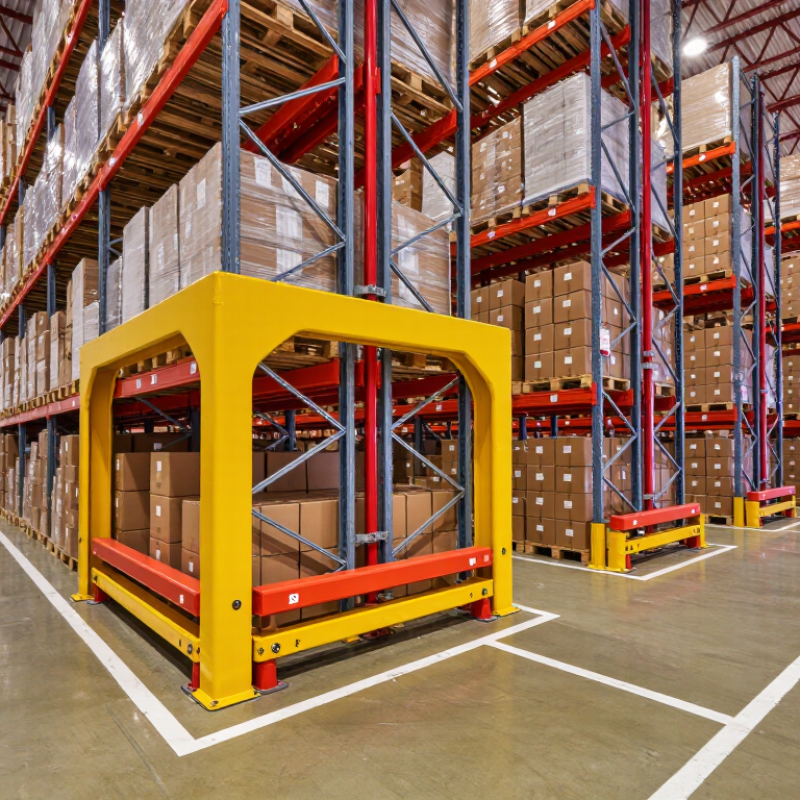
An impact rack is a warehouse storage rack protected against accidental contact from forklifts or pallet trucks. The rack stores palletized goods; guards and reinforced components help reduce collision damage. Protection may include upright column guards, end-of-aisle barriers, and sturdy base plates. These details matter most where turning space is tight.
OSHA cites estimates of 85 fatal forklift accidents and 34,900 serious injuries each year. That figure shows why rack protection deserves attention, though it does not mean every incident involves a rack. Rack Manufacturers Institute guidance stresses proper rack design, installation, and inspection. Guards must suit the aisle layout and vehicle traffic, not merely look substantial.
A good impact-protected rack system is selected for its load requirements, site conditions, and likely contact points. Keep clear sightlines around corners, and inspect uprights after any collision. A guard can conceal damage. That is easy to miss. Even a small bend or loosened anchor deserves review by a qualified rack professional before the bay returns to service.
What Are the Best Impact Racks in 2026?
What an Impact Rack Is and Where It Is Used
Impact racks are pallet-rack systems fitted with protective components to help reduce damage from forklift contact. They are commonly used in warehouses and distribution centers, especially around rack uprights, aisle ends, and other areas exposed to vehicle traffic.
This chart shows the calculated kinetic energy of a loaded forklift with a gross mass of 5,000 kg at different travel speeds. It illustrates why even low-speed contact can pose a risk; these figures are not impact ratings for any rack system.
Key Features That Make an Impact Rack Effective
An effective impact rack for strength training should feel stable under repeated loading, not merely look heavy.
Thick steel uprights, reinforced crossmembers, and secure hardware help limit sway when weights are reracked. Check the stated load capacity and how it was tested; impressive numbers mean little if the rack is poorly assembled. Small details matter.
Adjustable safety arms or straps should lock firmly and sit at practical heights for the lifter and exercise. Clear hole markings make adjustments easier, while enough depth provides room to move without crowding a wall. A broad, level base and suitable floor anchors can improve stability, but installation conditions matter. Even a strong frame may shift on an uneven surface. That part is easy to overlook.
For shared training spaces, inspect welds, protective finishes, and contact points that take repeated bar impacts. Replaceable hardware and accessible components can simplify routine checks. Avoid judging a rack by its advertised features alone: sharp edges, awkward pin placement, or poor access can make daily use frustrating. No design removes the need for careful setup and regular inspection.
Main Types of Impact Racks Available in 2026
Main Types of Impact Racks Available in 2026
Upright protectors wrap around the vertical columns most exposed to forklift contact. They are often made from steel or molded polymer, and their fit should match the upright profile.
End-of-aisle guards protect rack ends, where turning equipment can strike with more force. They usually anchor to the floor and need enough height to meet likely contact points.
Rack-mounted barriers create a buffer along busy aisles, while column guards shield building supports near storage areas. Some facilities also use beam protectors to reduce damage from pallet impacts during loading.
These options are not interchangeable. A guard that blocks one collision may leave another approach angle exposed. Measure aisle width, equipment turning paths, and anchor locations before choosing. It is easy to overlook the floor condition.
Tips:
Inspect guards after any visible strike, even if they look intact. Check for loose anchors, cracks, bent steel, or shifted rack components. Keep a simple damage log with dates and photos. Protection helps reduce impact damage, but it cannot replace safe driving, sound rack design, or qualified inspections. A small gap can matter.
How the Best Impact Racks of 2026 Compare
The best impact racks in 2026 differ less by appearance than by how they handle daily knocks. Compare frame thickness, joint design, and stated load capacity before choosing. Some models use reinforced uprights; others rely on replaceable guards to absorb collisions. Those guards can be useful near busy aisles, but they do not make an overloaded rack safe. Check the specifications.
Shelf spacing matters, too. Adjustable beams fit changing inventory, while fixed layouts may feel steadier for repeated loads. Look closely at the feet and anchoring options. A rack that shifts on a smooth concrete floor can create problems even when its frame looks solid. Small details matter.
The strongest comparison uses the same criteria for every option: rated capacity, assembly requirements, available protection, and inspection needs. Capacity figures may assume evenly distributed weight, not one heavy item placed at the edge. Read the manufacturer’s installation and loading guidance, and confirm the rack suits the actual floor and goods. In practice, the cheapest choice is not always the best value; replacing damaged guards is easier than replacing a bent upright. I would still allow room for uncertainty: real aisles are messier than product diagrams, and staff habits can change how much protection a rack needs.
What Are the Best Impact Racks in 2026? - How the Best Impact Racks of 2026 Compare
| Rack Type |
Best Suited For |
Space Needs |
Safety Features |
Main Advantages |
Things to Check |
| Full power rack |
Heavy barbell training and solo lifting |
Largest footprint; requires clear space around the rack |
Enclosed uprights with adjustable safety bars or straps |
Offers multiple bar positions and substantial protection when safeties are set correctly |
Overall dimensions, ceiling height, anchoring instructions, and rated capacity |
| Half rack |
Home gyms needing a balance of function and open access |
Medium footprint; generally more open than a full rack |
Adjustable spotter arms; some models include rear stabilizers |
Supports common barbell movements while allowing easier movement around the frame |
Spotter-arm compatibility, base stability, and whether floor anchoring is required |
| Squat stand |
Basic squats and presses in compact training spaces |
Small footprint; some stands can be moved or stored between sessions |
May have limited or no integrated safety arms, depending on the design |
Simple setup and typically less equipment occupying the room |
Stability under load, stand spacing, safety options, and the manufacturer’s load rating |
| Wall-mounted rack |
Garages or rooms where floor space is limited |
Small when folded; needs suitable wall clearance when in use |
Can include safety arms; safe use depends on correct installation |
Folding designs can free floor space when the rack is not being used |
Wall structure, fasteners, installation requirements, folded depth, and load rating |
| Modular rack |
Lifters who want to add compatible attachments over time |
Varies with configuration and selected attachments |
Can use rack-mounted safeties when designed for the specific frame |
Expandable setup may support varied exercises without replacing the main frame |
Upright dimensions, hole spacing, attachment compatibility, and combined load limits |
Comparison note: Rack dimensions, load ratings, included safeties, and installation requirements vary by model. Verify the manufacturer’s specifications and installation guidance before purchase or use.
How to Choose an Impact Rack for Your Needs
Choosing an impact rack starts with the lifts you actually do, not the largest number in a product listing. Measure your ceiling, floor space, and barbell length, then leave room to load plates safely. Check the rack’s stated capacity and whether it applies to the whole frame, pull-up bar, and safety arms. Ratings are not always presented consistently. Read the manual, and ask the seller to clarify unclear specifications.
Look closely at the steel, welds, hole spacing, and feet. A stable base matters when a bar meets the safety arms with force. If the rack needs anchors, confirm that your floor can accept them; a heavy frame alone does not guarantee stability. Check that the safeties adjust easily and sit at a useful height for your bench and squat positions. Also consider assembly: awkward bolts or poor instructions can turn a simple setup into a frustrating afternoon. Not glamorous, but important. The best choice is the rack that fits your room, training habits, and verified safety requirements—not simply the one that looks toughest.
Conclusion
Impact Racks are designed to support long, heavy, or awkwardly shaped materials while keeping them accessible and organized. Commonly used in warehouses, workshops, and industrial storage areas, they can help make better use of available space and simplify loading and retrieval. An effective rack should provide dependable load support, durable construction, suitable dimensions, and a layout that fits the materials being stored. Safety features and ease of installation and adjustment can also influence how well a rack works in a particular setting.
In 2026, impact racks may vary in configuration, capacity, and intended use, so the best option depends on the demands of the workspace rather than a single universal ranking. Compare rack types by their footprint, compatibility with stored items, load requirements, and flexibility for future changes. Before choosing, consider the available floor space, how materials will be accessed, and the expected storage conditions. A rack that matches these practical needs can support a more efficient and organized operation.

 AomeRack