Choosing Carton Flow Storage in 2026 requires more than comparing rack prices. It demands a clear view of SKU velocity, carton dimensions, replenishment frequency, labor costs, and order profiles. MHI’s 2024 Annual Industry Report found that 55% of supply-chain professionals expected increased technology investment. That signal matters. Yet automation alone will not fix poor slotting.
Warehouse design expert David J. Piasecki emphasizes a practical principle: “Put the right product in the right location.” Carton flow applies this idea physically. Fast-moving cartons sit within easy reach, while gravity rollers move reserve stock forward. In a busy pick face, this can reduce walking, improve replenishment visibility, and support orderly first-in, first-out rotation. The result is tangible: fewer awkward reaches, cleaner lanes, and faster access during peak waves.
Still, the choice is not automatic. Zebra Technologies’ warehousing research reports that many operations are accelerating automation plans through 2028. However, a high-volume warehouse may still waste money if cartons vary sharply in size or arrive inconsistently. I have seen designs look efficient on paper, then struggle when narrow cartons tilt or heavy cases overload the rollers. That deserves reflection. The best Carton Flow Storage solution balances throughput with control, safety, maintenance, and future SKU changes. This guide examines the decisions behind that balance, using operational evidence rather than fashionable assumptions.
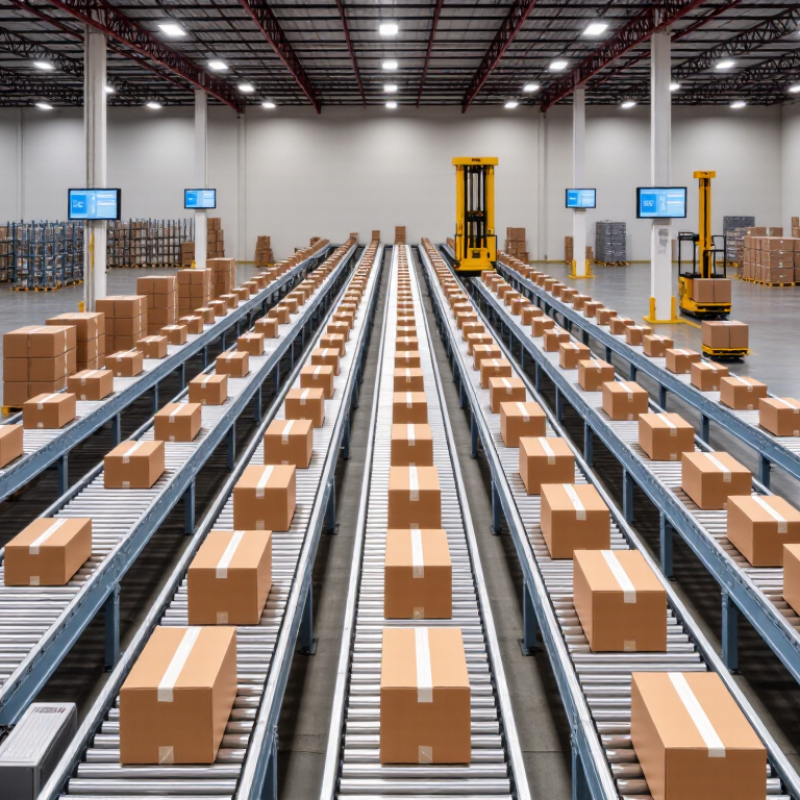
Carton flow storage is a gravity-fed shelving system for cartons, totes, and small containers. Each lane uses slightly inclined rollers or wheels. Workers load products from the rear and pick them from the front. As one carton leaves, the next carton moves forward automatically. It is simple, but not effortless.
This setup supports first-in, first-out stock rotation when workers load new cartons behind existing ones. It can reduce walking, improve picking visibility, and keep fast-moving items within easy reach. However, product weight, carton dimensions, and packaging strength must match the lane design. A crushed carton may stop the flow. A poorly adjusted lane can create unsafe movement. Real warehouse trials often reveal these issues earlier than spreadsheets do. That is worth remembering.
Tips: Measure the largest and smallest cartons before choosing a lane. Test several carton samples under normal load. Check roller spacing, shelf capacity, replenishment access, and picking height. Leave enough aisle space for safe handling. Ask suppliers for load data, installation guidance, and inspection instructions. Review the system after seasonal demand changes. It may need adjustment. A practical 2026 choice should also consider modular parts, clear labeling, and compatibility with barcode-based inventory checks. Choose based on measured workflow, not attractive specifications alone.
Choosing carton flow storage in 2026 starts with evidence, not a catalog picture. Count active SKUs, carton dimensions, case weights, and weekly order lines. Record both average and peak demand. A lane that fits today’s cartons may become useless after one packaging change. I have seen teams measure shelf width but ignore carton height. That mistake creates jams, unsafe lifting, and wasted vertical space. Keep samples nearby. Test them.
Map your available space in detail. Measure clear height, column positions, walkways, lighting, sprinklers, and replenishment access. Carton flow racks need room for picking and loading, not only storage. Compare a single-deep layout with a denser design. Density can look impressive. It may slow replenishment. Check how far workers walk between reserve stock, flow lanes, and packing benches. A simple time study often reveals more than a spreadsheet. Leave space for maintenance and future volume, even if forecasts feel reliable.
Match the system to fulfillment behavior. Fast movers usually deserve waist-to-shoulder locations, while slower items can use less convenient lanes. Use FIFO lanes for dated or rotation-sensitive inventory, and label every location clearly. Confirm roller capacity, lane angle, dividers, and load limits with a qualified supplier or engineer. Ask for testing with your actual cartons. Do not trust assumptions. Order profiles change during promotions, returns, and seasonal peaks. Review pick accuracy, replenishment time, and damage rates after installation. If results disappoint, adjust lane assignments before adding more equipment. The first layout is rarely perfect.
Choosing carton flow storage in 2026 requires more than checking shelf dimensions. The rack type must match carton size, picking speed, and replenishment habits. Roller lanes suit heavier cartons and longer travel distances. Wheel-bed lanes usually reduce resistance for lighter cartons. They can feel faster during manual picking. However, small cartons may catch between wheels if spacing is excessive.
Material selection affects durability and maintenance. Powder-coated steel frames provide strong support in dry warehouse areas. Galvanized components resist moisture better, especially near loading doors. Aluminum parts reduce weight, but they may not suit demanding industrial loads. Inspect lane dividers, bearings, and stop plates regularly. Small failures create large interruptions. I have seen operators blame the rack when poor carton alignment caused the real problem.
Load capacity needs careful interpretation. A lane rated for 150 kilograms may require evenly distributed cartons, not one concentrated package. Separate dynamic capacity from static capacity. Confirm the rating for each beam, lane, and support level. Measure carton width, depth, height, and bottom strength before ordering. A six-degree incline may move cartons smoothly, but heavier cartons can accelerate unexpectedly. Test one loaded lane first. That step is easy to skip, and regretting it later is common. Record replenishment frequency, carton turnover, and damage observations during the trial.
Choosing carton flow storage in 2026 requires more than counting cartons. The right configuration should protect operators, support accurate picking, and adapt as demand changes. Start with carton dimensions, weights, turnover rates, and replenishment paths. A lane that fits today’s box may jam tomorrow. Measure real cartons, not catalog assumptions. Adjustable dividers, smooth rollers, and controlled lane depth can reduce reaching and product damage. Keep heavy cartons between knee and shoulder height when possible. Use clear labels and visible stock levels to limit search time. Safety also depends on installation quality. Anchor frames as required, inspect rollers, and train staff to load from the safe side. I have seen fast systems become unsafe when teams overfill lanes during peak weeks. That mistake is easy to repeat.
Efficiency improves when flow direction matches the work sequence. Place high-volume items near the shortest practical travel route. Separate fast, medium, and slow movers, but review those groups regularly. Growth needs spare capacity, not just empty promises. Leave room for additional lanes, seasonal stock, and future equipment changes. A modular design may cost more initially, yet it can avoid disruptive rebuilding. Still, expansion space should not become wasted space. Review pick rates after four to six weeks, then change lane assignments based on evidence. The first layout will rarely be perfect. That is normal.
Tips: Test one representative lane before wider installation. Record pick time, replenishment effort, carton damage, and near-miss observations. Confirm load limits with technical documentation. Recheck the system after product sizes or staffing patterns change. Small reviews prevent large corrections.
Configuration comparison based on common warehouse planning criteria for manually picked cartons and totes
| Carton Flow Configuration | Typical Load per Lane | Recommended Lane Length | Product and Carton Profile | Stock Rotation | Picking Efficiency | Safety Considerations | Best-Fit Application | Growth and Adaptability | Planning Priority |
|---|---|---|---|---|---|---|---|---|---|
| Gravity Roller Carton Flow | Approximately 50–250 kg per lane | 1.2–3.6 m | Medium to heavy cartons with flat, stable bases; suitable for consistent carton dimensions | FIFO-friendly | High for repetitive order picking because cartons move toward the pick face automatically | Use lane brakes, end stops, load dividers, and controlled replenishment to prevent carton impact | High-volume case picking, distribution centers, and fast-moving consumer goods | Good; lanes and dividers can usually be reconfigured as SKU profiles change | Choose when carton weight and durability require robust load support |
| Wheel-Bed Carton Flow | Approximately 25–150 kg per lane | 0.9–3.0 m | Light to medium cartons, totes, and packages with smooth, reasonably flat bases | FIFO-friendly | High for fast-moving items when low rolling resistance is more important than maximum capacity | Verify package stability; add lane separators and braking controls where cartons can accelerate | Piece-picking areas, e-commerce operations, and light-to-medium duty order fulfillment | Very good for changing SKU mixes and shorter pick modules | Choose when smooth carton movement and flexible lane adjustment are key |
| Plastic Roller Carton Flow | Approximately 20–100 kg per lane | 0.9–2.4 m | Light cartons, bins, and totes; performs well in clean, organized picking environments | FIFO-friendly | Medium to high, depending on carton base condition and item turnover | Inspect rollers regularly for contamination, wear, and restricted movement | Pharmaceutical, electronics, retail, and clean assembly or kitting areas | Good; modular components support incremental changes | Choose when low noise, clean operation, and light-duty flexibility matter |
| Adjustable Carton Flow Shelf | Approximately 50–200 kg per shelf | 0.9–2.4 m | Mixed carton sizes requiring adjustable lane width, pitch, or shelf height | FIFO-friendly | Medium to high; productivity improves when lane dimensions match carton dimensions | Confirm frame capacity, shelf deflection, aisle clearance, and secure adjustment points | Multi-SKU pick faces, seasonal inventory, and operations with frequent assortment changes | Excellent; supports SKU growth and frequent re-slotting | Choose when flexibility and long-term reconfiguration are priorities |
| Carton Flow with Pick-to-Light | Approximately 20–150 kg per lane | 0.9–3.0 m | High-frequency SKUs with stable order profiles and clearly defined pick locations | FIFO-friendly | Very high for batch, zone, and high-frequency piece-picking operations | Use protected wiring, clear visual indicators, ergonomic shelf heights, and emergency access paths | High-throughput e-commerce, retail replenishment, and split-case distribution | Good, but hardware and software capacity should be planned for future SKU expansion | Choose when labor productivity and picking accuracy justify technology investment |
| Carton Flow with Pick-to-Voice | Approximately 20–150 kg per lane | 0.9–3.0 m | High-SKU environments where operators need hands-free instructions and confirmation | FIFO-friendly | High for walking-intensive, multi-order, or variable-SKU picking | Maintain clear audio communication, safe travel paths, and accessible replenishment zones | Large fulfillment operations with frequent order changes and broad SKU ranges | Very good when warehouse management system integration is scalable | Choose when hands-free operation and process consistency are important |
| Heavy-Duty Carton Flow Rack | Approximately 150–500 kg per lane | 1.5–3.6 m | Dense, heavy cartons or cases requiring reinforced frames, rollers, and structural components | FIFO-friendly | Medium to high, depending on load weight and replenishment frequency | Use rack protection, impact-resistant end stops, load signage, and documented inspection procedures | Industrial parts, beverage cases, maintenance supplies, and heavy spare parts | Good; expansion should account for floor loading and structural capacity | Choose only after verifying floor, frame, lane, and accessory load ratings |
| Carton Flow with Back-to-Back Pick Modules | Approximately 50–250 kg per lane | 1.2–3.6 m per side | Medium to high SKU density where storage capacity and short travel distances must be balanced | FIFO-friendly | High when pick faces are arranged close to replenishment and dispatch workflows | Separate replenishment and picking traffic where possible; maintain aisle width and end-of-aisle visibility | Large distribution centers, retail warehouses, and centralized fulfillment operations | Excellent for phased expansion, additional pick faces, and zone-based layouts | Choose when space utilization and scalable module design are central goals |
Planning note: Capacity and dimensional figures are indicative ranges commonly used for preliminary warehouse design. Final selection should be confirmed against actual carton dimensions, load weights, base quality, replenishment method, rack-frame ratings, floor conditions, aisle requirements, local safety rules, and the supplier’s tested specifications.
How to Choose Carton Flow Storage in 2026?
Plan installation before ordering carton flow storage. Measure carton dimensions, case weights, SKU velocity, aisle width, and picking height. Mark sprinkler clearance and emergency access on the floor. A practical layout should leave space for replenishment carts, not only pickers. The 2024 Annual Industry Report from the Material Handling Industry association found that 55% of respondents were increasing supply chain technology investment. That pressure makes adaptable storage more valuable. Choose adjustable lane dividers, replaceable rollers, and frames that can accept future sections.
Maintenance must be part of the installation plan. Inspect rollers, brakes, labels, and guide rails every month. Remove damaged cartons immediately. A loose roller can create a small delay, then a larger picking queue. Keep spare rollers and fasteners in a labeled maintenance bin. The U.S. Bureau of Labor Statistics continues to identify transportation and warehousing as injury-exposed industries, so train workers to load from safe positions. This detail is often overlooked.
Future upgrades should not depend on a complete rebuild. Reserve electrical routes for scanners, sensors, or later automation. Leave several adjustable lanes empty where demand may change. Use a simple spreadsheet to record lane capacity and repair history. It is not perfect, but it exposes weak assumptions. Some facilities overestimate growth and buy excessive capacity. Others forget seasonal peaks. Review actual order data after three months, then revise the layout carefully.
It is a gravity-fed shelving system for cartons, totes, and small containers. Inclined rollers move cartons toward the picking side.
Workers load new cartons from the rear and pick products from the front. When one carton leaves, another moves forward automatically.
Yes, when workers place newer cartons behind older ones. This arrangement helps older stock reach pickers first.
Measure carton width, depth, height, weight, and bottom strength. Test both the smallest and largest cartons under normal loads.
Roller lanes often suit heavier cartons and longer travel distances. Wheel-bed lanes usually reduce resistance for lighter cartons.
Crushed cartons, poor alignment, and excessive wheel spacing can stop movement. Small failures can create large picking delays.
Check dynamic and static capacity separately. Confirm ratings for each beam, lane, and support level.
Inspect rollers, brakes, labels, guide rails, dividers, and stop plates monthly. Remove damaged cartons immediately. Do not wait.
Choose adjustable dividers, replaceable rollers, and expandable frames. Reserve space for scanners, sensors, or additional lanes.
Load one lane with real cartons and observe movement, picking height, damage, and replenishment speed. Spreadsheets can mislead.
Choosing the right Carton Flow Storage system in 2026 begins with understanding how it works. These gravity-based racks use rollers or wheels to move cartons from the loading side toward the picking side, supporting first-in, first-out inventory rotation and faster order fulfillment. Before selecting a system, evaluate the size, weight, and turnover rate of your products, as well as available floor space, aisle requirements, and expected workflow. This assessment helps determine the appropriate rack dimensions, lane depth, and replenishment method.
Next, compare rack types, construction materials, roller designs, and load capacities to match operational demands. Consider configurations that improve visibility, reduce handling risks, and support safe access for employees. Adjustable lanes, clear labeling, ergonomic picking heights, and suitable safety features can improve both efficiency and accuracy. Finally, plan professional installation, routine inspections, cleaning, and component replacement. A flexible design with room for expansion can help the system adapt to changing inventory levels, new fulfillment processes, and future warehouse upgrades.

AomeRack