10 Tips for Buying Steel Containers Worldwide?

Time:2026-10-11 Author:Sophia
0%

Buying Steel Containers across borders can look simple from a product photograph. In practice, quality, documentation, delivery terms, and local requirements shape the real cost. A container may appear sound outside while hidden corrosion weakens its floor or corner fittings.

This guide presents ten practical tips for choosing reliable Steel Containers worldwide. It considers container type, dimensions, steel grade, weather resistance, locking systems, and intended use. Buyers should request recent photos, detailed specifications, inspection records, and clear information about repairs. A seller’s experience matters, but written evidence matters more.

Small details often reveal larger risks. Check door seals, welds, roof panels, undercarriage condition, and floor treatment. Ask whether the unit is new, refurbished, or previously used. Confirm the manufacturing standard and verify that markings match the supplied documents. Independent inspection can be valuable before payment, especially when the supplier is far away.

Shipping deserves equal attention. Compare freight routes, port charges, insurance, customs paperwork, delivery access, and agreed Incoterms. Requirements differ between countries and may change. Professional buyers also confirm that the container suits local safety, environmental, and import rules. Do not assume a low quote is the best deal.

Mistakes happen.

Even experienced teams can overlook a small fee or an unsuitable door height. This introduction helps readers question attractive offers, compare suppliers fairly, and make decisions based on evidence rather than urgency. Reliable purchasing is not only about finding a strong box. It is about controlling uncertainty from selection to arrival.
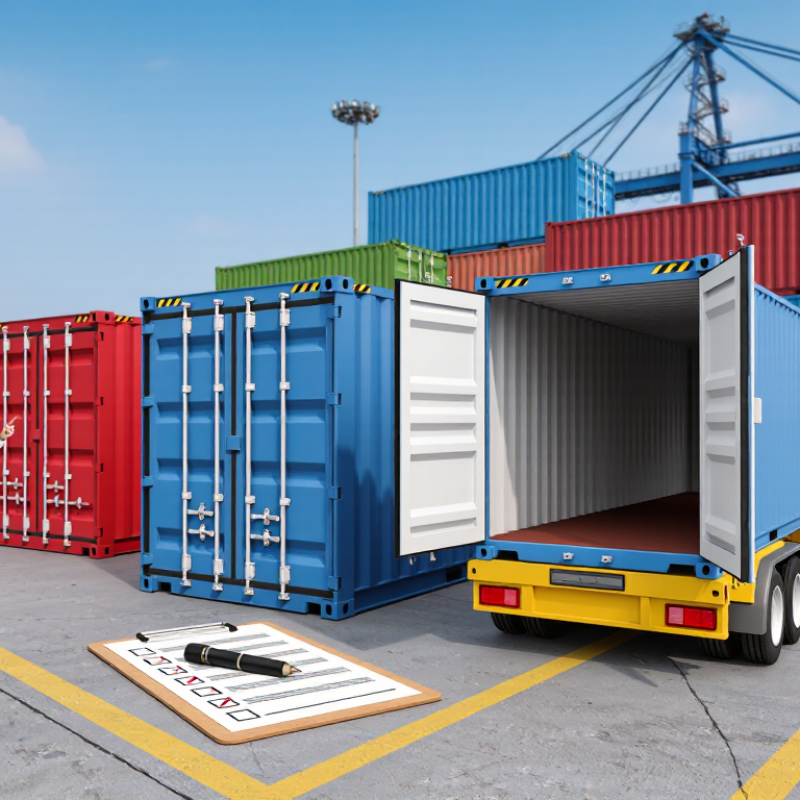
10 Tips for Buying Steel Containers Worldwide?

Define Use, Size, and Payload: Compare 20-Foot and 40-Foot ISO Units

10 Tips for Buying Steel Containers Worldwide?

Define use before choosing a container. ISO 668:2020 sets key dimensional and strength requirements, but local equipment still varies. A typical 20-foot dry unit offers about 33 cubic metres. A 40-foot unit provides roughly 67 cubic metres. That is nearly double the space, not double the payload. Many standard units have a maximum gross mass near 30,480 kilograms. Tare weight and road regulations reduce the usable cargo weight. Check the CSC safety plate and the seller’s weight certificate.

Tip 1: Match the box to the cargo. Dense machinery may fill a 20-foot container by weight first. Cartons, furniture, and packaged goods usually benefit from a 40-foot unit. Measure pallets, door clearance, and stacking height. Do not trust nominal volume alone.

Tip 2: Calculate the complete landed cost. Include inland transport, port handling, inspection, insurance, and possible storage. UNCTAD’s Review of Maritime Transport 2024 reports that maritime shipping carries over 80% of world merchandise trade by volume. That scale supports global availability, but prices and delivery times remain regional. Ask for production year, corrosion photographs, floor condition, and previous repair records. I once underestimated door-frame damage from one photograph. It was an expensive lesson.

Tip 3: Verify practical restrictions. A 40-foot container can exceed local axle limits when loaded densely. Confirm the truck chassis, route, lifting method, and unloading space before payment. For international movement, inspect markings, locking bars, seals, and structural posts. Weather-tight is not automatically cargo-worthy. A short independent inspection may prevent a much larger loss.

10 Tips for Buying Steel Containers Worldwide: 20-Foot vs 40-Foot ISO Units

Compare internal volume, typical payload, and external length before selecting a container.

A 40-foot ISO dry container provides approximately twice the internal volume of a 20-foot unit, but its typical payload is slightly lower because of the additional container tare weight. Final specifications can vary by manufacturer, container series, and local regulations, so always confirm the certified rating before purchase.

Verify ISO 668 Dimensions and CSC Safety Compliance Before Purchase

10 Tips for Buying Steel Containers Worldwide

Verify ISO 668 Dimensions and CSC Safety Compliance Before Purchase

Buying a steel container should begin with measurements, not attractive photographs. ISO 668 defines key external dimensions, tolerances, and container classifications. Measure twice.

Check length, width, height, corner castings, and door opening against the stated specification. Small dimensional differences can affect stacking, transport, and site access. Ask for the container’s identification number and compare it with the documents. The number should appear consistently on the door, frame, and inspection records. Paperwork matters.

CSC compliance requires more than a metal plate. Confirm that the safety approval plate is present, readable, and valid for the intended movement. Review the next examination date, maximum gross mass, and authorized technical details. A qualified inspector should examine corner posts, rails, welds, doors, locking bars, and flooring. Look for fresh paint hiding repairs. That warning is easy to miss.

Request dated inspection photographs, but do not rely on them alone. An independent pre-purchase inspection can reveal bent frames, corrosion beneath coatings, water entry, or weakened lifting points. Confirm that the container’s tested condition matches its current state. Local transport, customs, and placement rules may add requirements beyond ISO 668 and CSC standards. No checklist catches everything. Recheck the details before payment, especially when shipping across several countries.

10 Tips for Buying Steel Containers Worldwide? — Verify ISO 668 Dimensions and CSC Safety Compliance Before Purchase

A practical purchasing checklist for comparing steel freight containers, confirming international transport suitability, and reducing inspection and delivery risks.

No. Buying Tip What to Verify Reliable Evidence or Measurement Recommended Acceptance Check
1 Confirm the ISO container type and nominal size Identify whether the unit is a standard 20-foot, standard 40-foot, or 40-foot high-cube dry freight container. The container description should state its nominal ISO size and type code. Common external nominal dimensions are:
• 20-foot standard: 6,058 × 2,438 × 2,591 mm
• 40-foot standard: 12,192 × 2,438 × 2,591 mm
• 40-foot high-cube: 12,192 × 2,438 × 2,896 mm
Match the declared ISO size before comparing prices
2 Check ISO 668 dimensional compatibility Verify external length, width, height, corner fitting positions, and clearance requirements against the applicable ISO 668 series 1 container specifications. Request a dimension sheet, technical drawing, or inspection report showing measured external dimensions and corner fitting locations. Do not accept a container advertised as ISO-compatible if its measured dimensions or corner fittings are materially inconsistent with the stated type.
3 Validate the CSC Safety Approval Plate Confirm that the container has a legible and permanently attached CSC Safety Approval Plate issued under the International Convention for Safe Containers. The plate should normally identify the approval reference, manufacture date, maximum operating gross mass, allowable stacking load, and racking test load, as applicable. Reject units with a missing, altered, illegible, or suspicious plate. Verify the plate information with the inspection documentation.
4 Check CSC examination validity Determine whether the container is operating under a periodic examination scheme or an approved continuous examination program. Review the next examination date, examination record, or other recognized evidence attached to or supplied with the container. Ensure the CSC status will remain valid for the intended loading, transport, and destination requirements.
5 Inspect the steel structure and frame Look for twisted corner posts, cracked welds, bent top or bottom rails, damaged cross-members, and distortion around the corner fittings. Use a recent independent inspection report with photographs of all eight corner fittings, posts, rails, roof, floor frame, and underside. Structural members must be free from defects that could affect safe lifting, stacking, racking, or cargo containment.
6 Test watertightness and door performance Check roof panels, side walls, front wall, door seals, locking bars, hinges, and the sill for water entry or operational problems. Request a documented water test or conduct a controlled hose test, then open and close both door leaves through their full range. The doors should close, lock, and seal correctly, with no visible leaks, daylight gaps, or damaged gaskets.
7 Verify payload and gross-mass limits Separate maximum gross mass from tare mass and calculate the usable payload. Do not rely only on a nominal “capacity” statement. Check the CSC plate, manufacturer data plate, weighbridge record, and cargo requirements. Maximum gross mass is commonly around 30,480 kg for many standard dry containers, but the actual plate governs. Use the lower applicable limit among the container plate, road regulations, rail rules, vessel requirements, and destination-country laws.
8 Assess the floor, interior, and cleanliness Inspect floor boards, odor, stains, residues, protruding nails, corrosion, holes, and previous cargo contamination. Obtain interior photographs taken with doors open and record floor condition, repairs, coating, and any treatment or cleaning history. The interior must be suitable for the intended cargo and free of contamination or damage that could compromise loading safety.
9 Confirm manufacturing date and repair history Check the original manufacture date, ownership or custody records, major repairs, repainting, and replacement of structural components. Compare the door markings, identification records, inspection report, photographs, and sales documents for consistent information. Require written disclosure of major repairs and avoid units with unexplained identification changes or undocumented structural work.
10 Control delivery, documentation, and pre-shipment inspection Define the delivery location, transport responsibility, inspection point, export documents, customs information, and acceptance criteria. Use a signed inspection checklist, timestamped photographs, serial or identification details, packing or loading records, and agreed delivery terms. Make final payment conditional on matching dimensions, CSC status, visible condition, documents, and the agreed inspection report.

Important: Internal dimensions, tare mass, payload, floor capacity, and maximum gross mass vary by design, manufacturing tolerance, repairs, and equipment configuration. Always rely on the individual container’s CSC plate, verified inspection records, applicable local regulations, and the requirements of the carrier and destination country.

Assess Corten Steel, 1.6–2.0 mm Panels, and Corrosion Protection

When buying steel containers worldwide, inspect the steel specification before comparing prices. Corten steel can develop a protective patina, but it is not automatically corrosion-proof. It needs suitable wet-and-dry conditions, clean drainage, and sufficient airflow. In coastal or heavily polluted areas, salt and chemicals may accelerate corrosion instead. Ask for the steel grade, mill certificate, and production batch details. Do not rely on the word “weathering” alone.

Panel thickness deserves careful attention. Panels between 1.6 and 2.0 mm may suit many general-purpose containers, but their performance depends on framing, panel spans, handling, and expected loads. Thicker steel does not always mean better construction. Check actual thickness with a gauge, especially around doors, corners, and lower wall sections. Look for straight surfaces, consistent welds, and no visible pitting. Small defects matter.

Corrosion protection should cover more than the main panels. Inspect weld seams, cut edges, hinges, roof joints, and the underside. Coatings must have a stated system and measured dry-film thickness. Drainage holes should remain open, not blocked by paint or debris. Avoid direct contact between incompatible metals unless a proper barrier is installed. Independent inspection adds confidence, particularly for overseas orders. A minor detail can become expensive during shipping. I would also question unclear documents and rushed promises. Some specifications look precise, yet the delivered material may differ. That possibility deserves attention.

Compare New, One-Trip, and Used Units by Age, Repairs, and Tare Weight

Buying steel containers worldwide requires more than comparing paint and price. A new unit usually has unworn door seals, clean floors, and minimal repair history. A one-trip container may offer similar condition, but inspect its actual manufacturing date. “One-trip” does not mean damage-proof. Used units cost less, yet corrosion, patched panels, and uneven doors can affect future storage costs.

Age is only one clue. Review repair records, CSC plate validity, floor condition, roof dents, and door-gasket compression. Drewry’s Container Census 2024 reports a global container fleet exceeding 50 million TEU, showing how widely specifications and maintenance standards can vary. Ask for recent photos, but do not trust photos alone. A third-party inspection is cheaper than correcting a leaking roof after delivery. I have seen buyers miss small floor delamination that later required extensive replacement.

Tare weight deserves a separate check. ISO 668 dimensions do not guarantee identical empty weights across manufacturers or production years. Typical tare weight is about 2.2–2.4 tonnes for a 20-foot dry unit and 3.7–4.2 tonnes for a 40-foot high-cube unit, according to common industry specification ranges. Confirm the door plate, weighing document, and transport quotation. The International Convention for Safe Containers also requires a valid CSC safety approval for regulated international movement. A heavier box can reduce payload and increase inland costs.

The cheapest unit is sometimes the wrong unit.

Calculate Landed Cost, Freight, Duties, and Typical 28,000-kg Payload Limits

10 Tips for Buying Steel Containers Worldwide

Calculate the landed cost before comparing supplier prices. Add the container price, inland pickup, ocean freight, insurance, port handling, duties, taxes, and final delivery. Freight quotes can exclude congestion fees or documentation charges. Ask for a written breakdown with validity dates. I have seen a low quote become expensive after several small additions. It is easy to miss one.

Tip 1: Confirm the customs classification and duty rate with a qualified customs professional. Duties may depend on material, construction, origin, and declared value. Keep invoices, packing details, and certificates consistent.

Tip 2: Check the shipment’s real payload, not only its advertised capacity. A typical limit may approach 28,000 kg, but container tare weight, road axle rules, port equipment, and route restrictions can reduce it. Never assume the maximum applies everywhere.

Tip 3 Inspect steel thickness, weld quality, door alignment, floor condition, and corrosion protection. Request dated photos, inspection records, and exact external and internal dimensions.

Tip 4 Compare delivery terms carefully. “Delivered” can mean port delivery, not your warehouse gate.

Tip 5 Model currency changes and possible storage costs. A few extra days at the terminal can affect the final figure. I would also leave a contingency margin, perhaps 5–10 percent, because estimates are rarely perfect. Recheck the calculation before payment.

FAQS

How do I choose between a 20-foot and 40-foot container?

Choose according to cargo weight, volume, and handling space. A 20-foot unit offers about 33 cubic metres. A 40-foot unit offers roughly 67 cubic metres. Bigger does not mean double payload. Dense machinery may reach the weight limit first.

What cargo usually fits a 40-foot container better?

Cartons, furniture, and packaged goods often use the extra length efficiently. Measure pallets, door clearance, and stacking height. Leave space for safe handling. Nominal volume can mislead.

What is the typical payload limit?

Many standard units have a maximum gross mass near 30,480 kilograms. Subtract the container’s tare weight and local road limits. A heavy container leaves less room for cargo. Check the door plate and weight certificate.

What should I include in the total purchase cost?

Include inland transport, port handling, inspection, insurance, storage, and delivery charges. Regional prices can differ sharply. Ask for a written landed-cost estimate. Small fees can pile up quickly.

How can I inspect a used container before buying it?

Request recent photos of the roof, floor, doors, seals, and corner posts. Review repair records and corrosion areas. Check for patched panels and uneven doors. Photos help, but they are not proof. An independent inspection is safer.

Does “one-trip” guarantee excellent condition?

No. It usually suggests limited previous use, but damage can still occur. Check the manufacturing date, floor condition, door-gasket compression, and roof dents. Paint can hide problems. Look underneath too.

Why does tare weight matter?

Tare weight is the empty container’s weight. A typical 20-foot dry unit weighs about 2.2–2.4 tonnes. A 40-foot high-cube unit often weighs about 3.7–4.2 tonnes. Different production years may vary. Confirm the door plate and weighing document.

What transport restrictions should I confirm before payment?

Check axle limits, truck chassis compatibility, route access, lifting equipment, and unloading space. A fully loaded 40-foot container may exceed local road limits. Measure the entrance carefully. I once underestimated door-frame damage from one photograph. It was costly.

Conclusion

Buying Steel Containers worldwide requires careful planning, technical verification, and a clear understanding of total cost. Start by defining the intended use, required internal space, and cargo weight, then compare 20-foot and 40-foot ISO units according to loading needs. Before purchasing, confirm ISO 668 dimensions and check that the container has valid CSC safety compliance for its intended transport operations. Construction quality also matters: evaluate Corten steel, panel thickness typically ranging from 1.6 to 2.0 mm, door condition, floor strength, weld quality, and corrosion protection.

Buyers should compare new, one-trip, and used containers by reviewing age, repair history, structural condition, and tare weight rather than relying on appearance alone. Finally, calculate the complete landed cost, including inland transport, ocean freight, duties, handling, inspection, and delivery. Always verify the practical payload limit, with many standard units commonly planned around 28,000 kg, while accounting for local transport restrictions and safe weight distribution.

Sophia

Sophia

Sophia is a dedicated marketing professional with an exceptional depth of knowledge about her company's products and services. With a keen understanding of market trends and customer needs, she crafts insightful blog posts that not only inform but also engage readers, enriching the company’s online......