Top 10 Push-Back Storage Types for Global Buyers?

Time:2026-10-01 Author:Oliver
0%

For global buyers, selecting the right Push-Back Storage system involves more than comparing prices or pallet positions. Warehouse experience shows that aisle width, load depth, forklift reach, pallet quality, and product turnover can change the result dramatically. A solution that performs well in a high-volume distribution center may create delays in a smaller facility. Details matter.

Dave Piasecki, a respected warehouse operations consultant, offers a practical reminder: “Storage density is valuable only when it supports reliable flow.” That principle guides this overview of the Top 10 Push-Back Storage Types for Global Buyers. Each type is examined through usable capacity, loading behavior, safety features, maintenance needs, and compatibility with different pallet loads. The focus remains practical. Clear comparisons help buyers ask better questions before approving a layout or equipment specification.

The list also considers regional installation conditions, operator training, rack protection, and long-term service access. These points are sometimes overlooked. They should not be. Push-Back Storage can improve space utilization, yet it is not automatically the best answer for every warehouse. Product rotation, pallet consistency, and operating discipline still matter. No ranking is perfect, because site conditions can overturn a general recommendation. Buyers should verify load data, local engineering requirements, and supplier credentials before making a final decision. That small pause may prevent an expensive mistake.
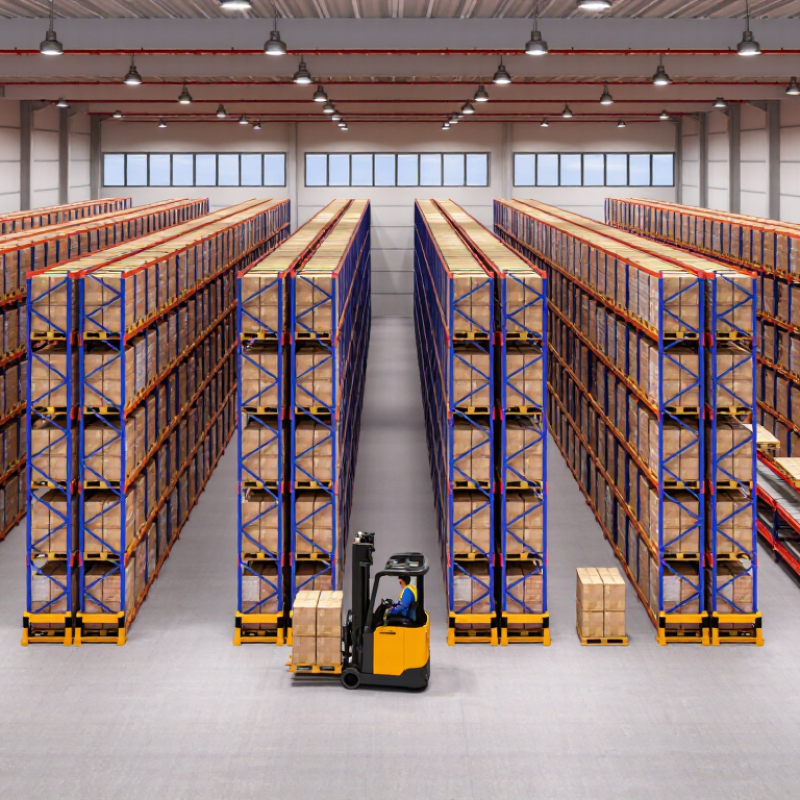
Top 10 Push-Back Storage Types for Global Buyers?

What Push-Back Storage Is and How It Works

Push-Back Storage: What It Is and How It Works

Push-back storage is a high-density pallet system designed for warehouses with several pallets per product. It uses inclined rails, carts, or rollers inside each storage lane. A forklift places the first pallet at the front position. The next pallet gently pushes it deeper into the lane. When the front pallet is removed, the stored pallets move forward by gravity. This creates a practical last-in, first-out flow and reduces unnecessary travel for forklifts.

The system works best when each lane holds similar products with stable demand. Operators can access several pallets from one aisle, saving valuable floor space. However, pallet weight, dimensions, and load stability must match the equipment design. Not every pallet fits. Poorly balanced loads may move unevenly or damage rails. In my experience, layout planning deserves as much attention as the rack itself. A small measurement error can reduce capacity and slow daily operations. Regular inspections also help identify worn wheels, damaged beams, or unsafe loading habits.

Tips: Keep heavier pallets in lower positions whenever possible. Train forklift operators to enter lanes slowly and center each load. Check product rotation needs before choosing this system. Push-back storage is efficient, but it is not perfect for every inventory profile. Mixing many unrelated products in one lane can create picking delays. Proper labeling, clear aisle markings, and scheduled maintenance improve reliability.

How Push-Back Storage Systems Are Classified

Top 10 Push-Back Storage Types for Global Buyers

How Push-Back Storage Systems Are Classified

Push-back systems are classified by pallet movement, lane depth, and loading direction. They are also grouped by rail design, cart structure, and operating environment. Common types include standard LIFO push-back, FIFO push-back, double-deep, multi-deep, gravity-roller, wheel-bed, cart-based, rail-guided, cold-storage, and high-density systems. These categories overlap. A system may fit several groups.

LIFO designs load and unload pallets from one aisle. They suit products with consistent turnover and limited access requirements. FIFO versions support rotation by using separate loading and picking sides. Double-deep lanes balance density and accessibility. Multi-deep lanes store more pallets, but they need tighter inventory control. Roller and wheel-bed systems differ in friction, noise, maintenance, and pallet compatibility. Cold-storage models require corrosion-resistant materials and reliable movement in low temperatures. These details matter.

Tips: Confirm pallet dimensions, weight, and bottom-board quality before selecting a system. Ask for a live load test. Check lane slope and stopping distance. Operators often notice issues that drawings miss. A qualified storage engineer should review rack loads, aisle clearances, floor conditions, and local safety requirements. Do not compare capacity alone. A dense lane can reduce picking speed. That trade-off deserves honest review. Classification helps, but it does not replace a site-specific assessment.

The Top 10 Push-Back Storage Types for Global Buyers

The Top 10 Push-Back Storage Types for Global Buyers include pallet-on-pallet, cart-based, roller-bed, wheel-rail, inclined-rail, double-deep, single-entry, high-rise, cold-storage, and seismic-rated systems. Each type supports last-in, first-out inventory flow, but performance depends on pallet quality, load weight, and aisle design.

Cart-based racks suit mixed pallet sizes. Roller-bed designs offer smoother movement for stable loads. Wheel-rail systems can reduce friction, though damaged pallets may create interruptions.

Pallet-on-pallet storage provides strong density for uniform products. Inclined-rail systems assist pallet return through gravity. Double-deep layouts increase capacity but require suitable handling equipment.

High-rise systems use vertical space efficiently, while cold-storage versions need corrosion-resistant components and reliable clearances.

Seismic-rated structures require local engineering review. This point is often underestimated. A rack may look robust but still need certified load calculations, floor checks, and operator training.

Tips:

Confirm pallet dimensions, entry height, beam capacity, and forklift reach before ordering. Ask for drawings showing tunnel depth and aisle clearance. Check whether replacement parts are locally available. Buyers should also verify coating performance in humid or chilled environments.

In practice, the cheapest layout is not always the most economical. We have seen small pallet variations reduce usable capacity and slow loading work. A pilot bay can expose these problems before full installation.

How to Compare Capacity, Accessibility, and Operating Efficiency

Top 10 Push-Back Storage Types for Global Buyers: How to Compare Capacity, Accessibility, and Operating Efficiency

Push-back storage is not one universal solution. Common types include cart-based, roller-based, gravity-rail, double-deep, and hybrid selective systems. Cart systems usually offer compact LIFO storage, while roller designs can improve pallet movement and reduce forklift travel. The right choice depends on pallet weight, SKU turnover, aisle width, and loading discipline.

The 2024 MHI Annual Industry Report found that 74% of supply-chain leaders planned to increase technology investment, but storage layout still determines daily efficiency.

Measure usable capacity, not catalogue capacity. A double-deep lane may hold more pallets, yet it can limit access to slower-moving inventory. A warehouse with 90% occupancy may perform worse than one operating at 80%, if operators constantly search for open lanes. WERC benchmarking reports continue to emphasize labor productivity, inventory accuracy, and cycle time as practical distribution-center measures. These metrics should be reviewed beside pallet positions.

Forklift compatibility matters. Rail spacing, pallet quality, load stability, and lane depth affect safety and throughput. The U.S. Bureau of Labor Statistics reported over 7,000 nonfatal workplace injuries involving powered industrial trucks in 2022, showing why operating conditions deserve equal attention.

Energy savings are possible through shorter travel paths, though this benefit is often overstated. Real facilities have uneven floors, damaged pallets, and changing order profiles. A capacity model can look perfect on paper and still fail during the afternoon rush. Test one representative lane before approving a full installation.

How to Choose the Right Push-Back Storage Type for Your Market

Choosing a push-back storage type starts with market behavior, not rack depth. A 2024 report by Mordor Intelligence estimates the warehouse automation market will grow from about USD 25.7 billion in 2024 to USD 54.5 billion by 2029. Yet not every market needs automation-heavy storage. In regions with moderate labor costs, a manually operated two-deep system may offer better value. It suits stable SKUs, limited pallet variety, and frequent access to the front position.

For higher storage density, three- to six-deep push-back lanes can reduce aisle space and improve cubic utilization. This matters where industrial land is expensive. The 2024 MHI Annual Industry Report also shows strong investment interest in supply chain technology, but investment alone does not guarantee a suitable design. Check pallet dimensions, load weight, forklift turning radius, and local fire requirements. Humid markets may need stronger corrosion protection. Seismic areas require additional engineering review.

Product rotation is another hard test. Push-back storage uses a last-in, first-out pattern, so it fits seasonal goods or similar pallets better than strict FIFO products. A spreadsheet may say six-deep storage is efficient. Real operators may disagree after daily handling begins. Review order frequency, replenishment timing, and damaged pallet rates before selecting the final type. Pilot one lane if the data remains uncertain.

Top 10 Push-Back Storage Types for Global Buyers? - How to Choose the Right Push-Back Storage Type for Your Market

Rank Push-Back Storage Type Typical Loading Method Typical Lanes / Level Typical Pallet Capacity per Lane Suitable Pallet Load Storage Density Best-Fit Market or Application Main Advantages Key Limitations Buyer Selection Priority
1 Carton-Flow Push-Back Rack Cartons or totes are manually loaded from the replenishment side and move forward by gravity rollers. Usually 2–6 levels 4–12 cartons or totes Light to medium unit loads, commonly up to about 50 kg per carton depending on the system. High Retail distribution, e-commerce fulfillment, spare parts and order-picking operations. Good stock rotation, fast picking and clear product presentation. Not intended for heavy pallets; product dimensions must be consistent enough for reliable flow. Choose when order-picking speed and SKU accessibility are more important than pallet storage.
2 Pallet Push-Back Rack with Trolleys Forklift loads a pallet onto a wheeled trolley; the next pallet pushes the previous pallet deeper into the lane. Usually 2–6 pallet positions deep and 2–5 levels high 2–6 pallets Common pallet loads of approximately 500–1,500 kg, subject to rack and floor design. High General warehousing, food distribution, beverage storage and medium-turnover inventory. High density with reduced forklift travel and fewer aisles than selective pallet racking. Usually follows a last-in, first-out pattern within each lane and needs compatible pallet dimensions. Choose when storage density is needed and strict first-in, first-out rotation is not essential.
3 Pallet Push-Back Rack with Rollers Pallets move on inclined rollers or wheel beds as new pallets are loaded from the front. Usually 2–5 pallet positions deep and 2–6 levels high 2–5 pallets Medium to heavy pallet loads, commonly about 500–1,500 kg per pallet. High Manufacturing, wholesale distribution and warehouses handling stable, uniform pallets. Smooth pallet movement, strong space utilization and relatively fast loading and retrieval. Roller spacing and pallet quality are critical; damaged or weak pallets may not move safely. Choose when pallet quality is controlled and smooth movement is preferred over the lowest initial cost.
4 FIFO Pallet Flow Rack Pallets are loaded from the rear and move by gravity toward the picking face on rollers. Usually 2–6 pallet positions deep and 2–5 levels high 2–6 pallets Uniform pallet loads, commonly around 500–1,500 kg per pallet. High Food, beverages, pharmaceuticals and other products requiring first-in, first-out rotation. Automatic stock rotation, fewer replenishment conflicts and efficient picking from the front. Higher investment and maintenance requirements; pallets must be compatible with the roller system. Choose when expiry control, batch rotation and FIFO discipline are mandatory.
5 Drive-In Push-Back Hybrid Rack Forklifts enter the storage block while pallets are positioned on rails or support elements. Usually 3–8 pallet positions deep and 2–6 levels high 3–8 pallets Heavy, uniform pallet loads, commonly about 800–1,500 kg per pallet. Very High Cold storage, seasonal goods, bulk inventory and operations with a limited number of SKUs. Very high cube utilization and minimal aisle space inside the storage block. Lower selectivity, more complex forklift operation and greater risk of rack impact. Choose when maximum capacity is more important than direct access to every pallet.
6 Movable Push-Back Rack Rack carriages travel on floor rails or guided systems to open an aisle only where needed. Commonly 2–6 pallet positions deep and 2–7 levels high 2–6 pallets Medium to heavy pallet loads, often about 500–1,500 kg per pallet. Very High High-cost real estate markets, archive storage, cold rooms and facilities with limited floor area. Can substantially reduce fixed aisle space while maintaining selective access to storage blocks. Higher capital cost, moving components and greater requirements for floor flatness and maintenance. Choose when land or building space is expensive and utilization justifies the investment.
7 Mobile Pallet Push-Back Rack Motorized bases move rack rows horizontally, creating a working aisle when required. Usually 2–6 pallet positions deep and 2–8 levels high 2–6 pallets Medium to heavy pallet loads, commonly around 500–1,500 kg per pallet. Very High Cold-chain logistics, high-value inventory and sites where energy or floor-area costs are significant. High storage density with improved access control and potential reductions in conditioned space. Requires electrical systems, safety controls, preventive maintenance and trained operators. Choose when long-term space savings and controlled access outweigh system complexity.
8 Gravity-Assisted Pallet Push-Back Rack Inclined rollers or wheels use gravity to return pallets toward the loading and unloading face. Usually 2–5 pallet positions deep and 2–6 levels high 2–5 pallets Uniform pallet loads, commonly about 500–1,500 kg per pallet. High High-throughput distribution, beverage handling and warehouses with repetitive pallet profiles. Reduced manual handling, fast replenishment and better lane visibility than block stacking. Speed controllers, separators and brakes may be required; system performance depends on pallet condition. Choose when fast movement and consistent pallet geometry are available.
9 Double-Deep Push-Back Rack Two rows of pallets are stored one behind the other using reach-truck or suitable deep-reach equipment. Usually 2 pallet positions deep and 2–6 levels high 2 pallets Medium to heavy pallet loads, commonly about 500–1,500 kg per pallet. Medium–High Distribution centers with moderate SKU variety and relatively high pallet volumes per SKU. More density than single-deep selective rack while retaining better selectivity than deep-lane systems. Requires specialized handling equipment and may reduce visibility of rear pallets. Choose when a balance between access and density is needed for medium-to-high volume SKUs.
10 Low-Profile Push-Back Rack Shorter rack modules use shallow lanes and lower elevations for quick access and simplified handling. Usually 2–4 pallet positions deep and 2–4 levels high 2–4 pallets Light to medium pallet loads, commonly about 300–1,000 kg per pallet. Medium Small and medium warehouses, low-clearance buildings, regional storage and mixed-SKU operations. Lower structural complexity, easier access and suitability for buildings with height restrictions. Lower capacity per cubic meter than taller or deeper systems; limited expansion potential. Choose when building height, equipment reach or budget limits restrict a high-density design.
Selection note: Capacity figures are typical planning ranges rather than universal specifications. Final selection should be verified against pallet dimensions, unit load weight, rack height, seismic conditions, floor capacity, forklift type, fire-protection requirements, local regulations and the required stock-rotation method.

FAQS

What is push-back storage?

Push-back storage is a high-density pallet system using inclined rails, carts, or rollers. Pallets move inside storage lanes. It supports last-in, first-out inventory flow.

How does a push-back lane operate?

A forklift places the first pallet at the lane entrance. Each new pallet gently pushes earlier pallets deeper inside. When the front pallet leaves, gravity moves the remaining pallets forward.

Which products suit push-back storage best?

It suits products with several pallets per item and steady demand. Similar products should share one lane. Mixing unrelated products may cause picking delays.

What pallet details must buyers check?

Check pallet length, width, weight, entry height, and load stability. Measure carefully. A small error can reduce capacity or block movement.

What are the main push-back storage types?

Common types include cart-based, roller-based, gravity-rail, double-deep, high-rise, cold-storage, and seismic-rated systems. Each type has different access and capacity limits.

Does push-back storage always provide the highest capacity?

No. Catalogue capacity can be misleading. A double-deep lane may hold more pallets but reduce access to slow-moving stock.

How can operators improve safety and reliability?

Operators should enter lanes slowly and center every pallet. Keep heavier loads lower when possible. Inspect wheels, rails, beams, and floor conditions regularly.

Is push-back storage suitable for every warehouse?

No. The system may fail with unstable loads, damaged pallets, changing demand, or poor aisle planning. It looks efficient on paper, but real operations can disagree.

How should a buyer test a proposed layout?

Test one representative lane before full installation. Check forklift reach, aisle clearance, pallet movement, and loading speed. A pilot may reveal problems early.

Can push-back storage reduce operating costs?

It can shorten forklift travel and save floor space. However, savings depend on layout, maintenance, and operator discipline. The benefit is not automatic.

Conclusion

Push-Back Storage is a high-density pallet storage solution designed to improve warehouse space utilization while maintaining efficient product handling. It typically uses inclined lanes, carts, or roller-based mechanisms that allow pallets to be loaded and retrieved from the same aisle. When a new pallet is loaded, it pushes previously stored pallets deeper into the lane, while gravity or controlled movement brings pallets forward during unloading. This structure reduces unnecessary travel and supports organized, last-in, first-out inventory operations.

The main Push-Back Storage types can be classified by loading method, lane structure, pallet capacity, and movement technology. The top options for global buyers may include cart-based, roller-based, two-deep, multi-deep, dynamic, and customized configurations. Choosing the right system requires comparing storage density, accessibility, load requirements, operating speed, safety features, maintenance needs, and available warehouse space. Buyers should also consider local climate, workforce skills, pallet standards, product turnover, and long-term expansion plans to select a practical solution for their market.

Oliver

Oliver

Oliver is a seasoned marketing professional with a wealth of expertise in driving brand awareness and engagement. With a deep understanding of our company's product offerings, he consistently delivers high-quality content that enriches our professional blog. His insights not only shed light on......