Engineered for heavy-duty structural load-bearing and streamlined supply chain optimization.
An analysis of structural capacity, regulatory alignment, and supply chain demands in modern logistics.
The acceleration of global e-commerce and the integration of automated cold chains have necessitated a structural evolution in warehousing. Standard storage spaces are shifting rapidly toward multi-tier platform mezzanine racks and automated pallet grids. Modern fulfillment centers now demand structural configurations that maximize volumetric density while providing 100% selectivity.
Global architectural standards require that structural racking systems sustain complex dynamic loads. From vertical gravitational forces to lateral seismic shifts, selecting the appropriate grade of structural steel (such as Q235B or Q355B cold-rolled steel profiles) is critical. Underestimating structural load capacities leads to material fatigue, endangering human capital and structural safety.
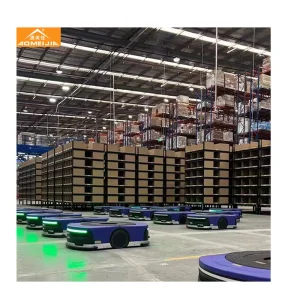
Modern distribution centers no longer rely solely on human-operated forklifts. Incorporating AGVs (Automated Guided Vehicles) and AMRs (Autonomous Mobile Robots) requires platform racking systems to feature precise dimensional tolerances, high floor flatness, and robust guidance tracks to support smooth automated logistics paths.
Ensuring structural integrity, raw material traceability, and regulatory safety for industrial platform systems.
CE Certification serves as a declaration that products comply with essential European safety, health, and environmental requirements. In industrial logistics, this aligns directly with EN 15512 (Steel static storage systems – Adjustable pallet racking systems - Principles for structural design) and EN 15620 (Tolerance, deformations, and clearances).
Failing to deploy certified racking systems within European or North American operations exposes companies to significant regulatory liabilities, operational closures, and insurance invalidation in the event of structural structural failures.
The engineering validation behind a CE Certified Platform Rack involves comprehensive verification phases:
| Racking Class | Applicable Standards | Max Load Capacity (UDL) | Material Specification | Best Use Cases |
|---|---|---|---|---|
| Class 400 (Medium Duty) | EN 15620, NSF Approval | 300 - 800 kg/㎡ | Q235B Cold-Rolled Steel | E-commerce order fulfillment, manual picking mezzanines |
| Class 300 (Heavy Duty) | EN 15512, CE Certified | 800 - 1500 kg/㎡ | Q355B Structural Steel | Industrial spare parts, heavy pallet storage, logistics hubs |
| Class 100 (Ultra Heavy / AGV) | EN 15620, FEM Standards | 1500+ kg/㎡ | High-Tensile Structural Plate | Automated crane storage, heavy industrial manufacturing platforms |
A global pioneer in designing, developing, and manufacturing high-performance warehouse storage solutions.
Established in 2016, Guangdong Aomeijia Metallic Products Co., Ltd. has established itself as an authoritative manufacturer specializing in high-capacity warehouse storage racks, industrial shelving systems, pallet racks, and customized structural metal storage installations. With a state-of-the-art manufacturing plant spanning approximately 28,000㎡, we offer a comprehensive production environment that integrates structural R&D, advanced manufacturing, strict quality inspection, and international supply chain distribution.
Our annual export revenue has reached approximately US$18 million, backed by 8 years of global export experience and more than 12 years of industry experience in the warehouse storage equipment sector.
Our QA/QC program follows an ISO-based quality management structure covering raw material testing, welding strength evaluation, coating thickness verification, and heavy load testing. Every installation undergoes meticulous dimensional accuracy checks and finish testing prior to shipping.
Supported by a dedicated internal Quality Assurance team of 45 professional inspectors, we maintain full traceability for all steel profiles utilized, ensuring that each product complies with relevant regional safety criteria.
Leveraging deep international trade experience, we offer comprehensive OEM and ODM support. Partnering with over 1,200 supply chain partners allows us to secure stable raw materials and offer competitive pricing globally.
Our client base includes major third-party logistics (3PL) providers, global retail chains, e-commerce distributors, system integrators, and industrial construction firms across North America, Europe, Southeast Asia, the Middle East, Australia, and South America.
Innovation remains central to Aomeijia. Our engineering group features 18 structural engineers dedicated to improving space efficiency and system load capacities. Each year, we develop and optimize approximately 120 new products and storage solutions, responding to global logistics shifts.
How platform racking systems conform to regional building regulations, climatic concerns, and automation patterns.
Industrial installations in North America must comply with RMI (Rack Manufacturers Institute) guidelines and local IBC (International Building Code) seismic requirements. Racks must account for regional seismic factors, including specific baseplate engineering, anchor bolt configurations, and structural bracing to prevent buckling during seismic activity.
European markets prioritize EN 15635 guidelines for the ongoing maintenance and operation of structural storage equipment. Requirements focus on operator safety, load indicators, clear marking signs, and ecological coating technologies, such as lead-free and low-VOC powder finishes.
Smart warehouses utilizing Automated Guided Vehicles (AGVs) require platform racks built to exact dimensional tolerances. Variations in structural verticality or floor transitions can disrupt robotic sensors. Our specialized AGV racks are engineered for high-precision height leveling to ensure seamless automated retrieval workflows.
Discover the future of structural warehouse design, focusing on structural sensors, eco-friendly manufacturing, and modular growth.
The integration of digital strain gauges and vibration sensors into main rack uprights represents the next step in warehouse safety. These systems alert warehouse operators to structural overload issues or accidental forklift impacts, allowing for proactive maintenance to prevent catastrophic structural failures.
As corporate sustainability goals become more prominent, demand for green steel racking is increasing. Using cold-rolled structural steel with recycled content, combined with low-emission curing ovens in coating lines, reduces the carbon footprint of warehouse setups.
Modern distribution facilities require adaptive layouts. Interlocking, boltless connections enable operators to modify and expand platform layouts as seasonal demands change, minimizing down-time and maximizing capital efficiency.
Expert guidance on structural safety, design specifications, and compliance requirements.
CE certified racking systems are engineered in accordance with EN 15512 (structural design requirements for adjustable pallet racking) and EN 15620 (which defines limits for installation tolerances and clearances). Compliance ensures the system can safely support its rated load under typical operating conditions, including basic seismic factors, protecting both personnel and stored inventory.
Load calculations are based on Uniformly Distributed Loads (UDL) measured in kilograms per square meter (kg/㎡). Structural engineers determine these limits by analyzing the yield strength of the steel (e.g., Q235B vs Q355B), beam profiles, column spacing, and thickness. It is critical to adhere to these calculated limits to prevent material fatigue and deflection beyond standard tolerances.
Q235B steel is a standard carbon structural steel with a yield strength of 235 MPa, commonly used for light-to-medium-duty storage racks. Q355B is a low-alloy, high-strength steel with a yield strength of 355 MPa. Using Q355B allows engineers to design systems with higher load capacities and thinner profiles, which is ideal for heavy-duty pallet racks and multi-tier mezzanines.
Automated Guided Vehicles (AGVs) rely on precise structural dimensions to ensure accurate sensor readings during automated picking. Standard racking systems may allow for minor level variances, but AGV-compatible racks require tighter tolerances (often within +/- 1mm) and highly flat deckings to guarantee smooth robotic operations.
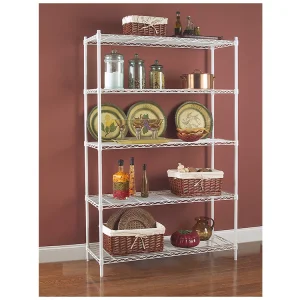
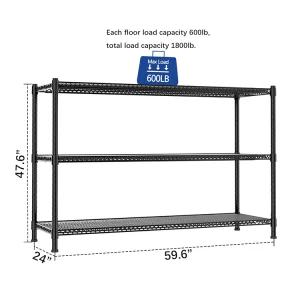
NSF certification indicates that a storage product has been tested to meet strict public health and sanitation standards. For wire shelving used in food processing, cold storage, or medical facilities, NSF certification ensures the finish is resistant to corrosion, easy to clean, and prevents bacterial growth.
High-precision structural configurations designed for automated fulfillment and commercial distribution.
 AomeRack