Engineered high-capacity hardware configurations supporting global distribution networks.
In modern industrial storage design, the containment of structural loads, particularly for long, unwieldy materials such as timber, steel piping, profiles, and industrial components, demands specialized engineering paradigms. Cantilever storage racks, characterized by their column-free load paths, allow for uninterrupted horizontal storage. Selecting an OEM/ODM manufacturing partner goes beyond basic metal fabrication; it requires structural analysis, metallurgy validation, and adherence to international standardizations.
As a leading supplier, Guangdong Aomeijia Metallic Products Co., Ltd. leverages deep engineering expertise to bridge the gap between heavy structural design and global supply chain demands. Founded in 2016, we integrate raw material procurement, structural engineering, precision robotic welding, automated surface preparation, and complete logistics into a turnkey production cycle.
Our solutions target critical performance indicators, including deflection calculations (such as L/180 or L/240 rules), torsional rigidity, and weld performance. This ensures high-yield performance under continuous high-capacity loading conditions in severe environments.
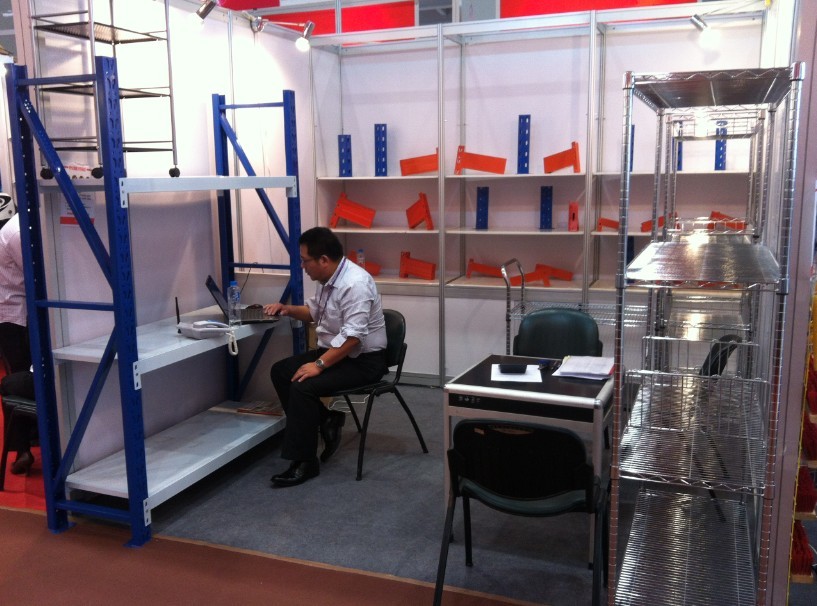
Understanding the technical evolutions and regulatory requirements shaping global material handling systems.
Modern distribution warehouses are moving away from purely manual layouts to Automated Storage and Retrieval Systems (ASRS). Structural cantilever uprights must be produced with tight dimensional tolerances (often within 1mm margins) to guarantee compatibility with robotic shuttles and crane stackers without dynamic structural interference.
To reduce steel weight while maintaining extreme load capacity, manufacturers are shifting from traditional Q235B steel to higher-tensile Q355B and custom hot-rolled structural shapes. This shift reduces dead loads on foundation slabs and improves performance in high seismic activity zones.
Standard cold-rolled sections are increasingly being combined with hot-rolled structural steel columns to create optimal balance points between cost efficiency and structural strength. Modular hook systems allow easy adjustments, letting operations configure layouts around dynamic SKU configurations.
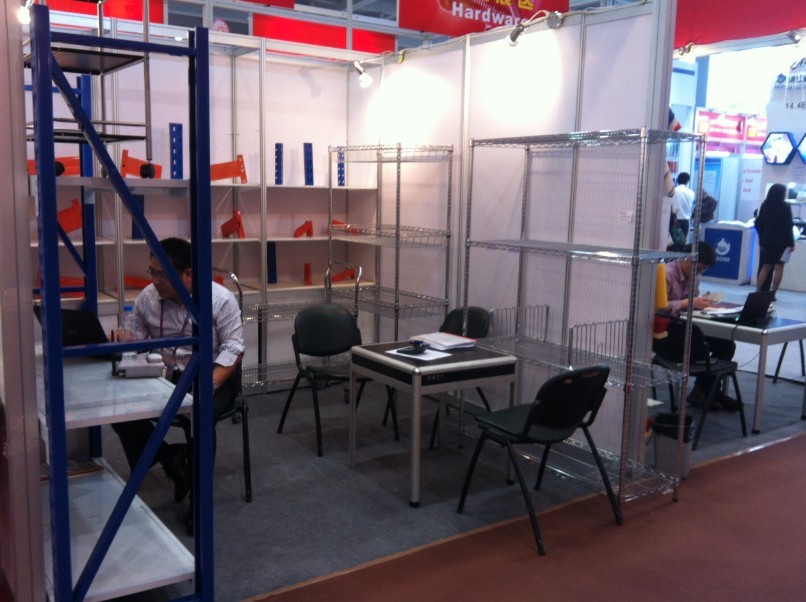
Standard catalog storage systems often fail to meet the distinct engineering and structural needs of custom projects. Aomeijia’s design services ensure that every customized cantilever layout undergoes complete validation using Finite Element Analysis (FEA) software. This process simulates maximum loaded deflections, torsional buckling, and seismic responses.
Our engineering department, composed of 18 professional engineers, collaborates closely with industrial clients to customize column dimensions, arm configurations, brace lengths, and material grades. Our testing protocols verify load capacity and structural performance before production begins.
Key optimization factors we consider include:
• Arm Deflection Control: Limiting deflection under maximum load to L/180, preventing vertical binding of mechanical or automated handling equipment.
• Upright Load Distribution: Designing rigid connections between columns and bases using high-grade structural hardware to prevent structural tipping under uneven loading.
• Corrosion Mitigation: Applying customized powder coatings (complying with ASTM standards) or hot-dip galvanizing for harsh outdoor storage of construction materials.
From raw steel receipt to global delivery, our structured production lifecycle ensures consistency and code compliance.
We source raw steel sheets and sections from top steel mills. These materials must include mill test certificates verifying chemical properties and yield strength before passing incoming inspection.
Steel profiles are processed using modern roll-forming and CNC laser cutting systems, ensuring structural alignment and consistent spacing for arm adjustments.
Welding operations are performed by certified robotic cells and senior technicians, adhering to ISO and AWS D1.1 standards to eliminate microstructural defects in load-bearing joints.
Parts undergo chemical pre-treatment, pickling, and phosphating, followed by electrostatic powder coating or hot-dip galvanizing for excellent corrosion resistance.
Aomeijia's team of 45 professional QA inspectors conducts dimensional audits, weld testing, coating thickness checks, and destructive load tests on production samples to verify safety compliance.
Partnering with supply chain networks and logistics operators across North America, Europe, and Asia-Pacific.
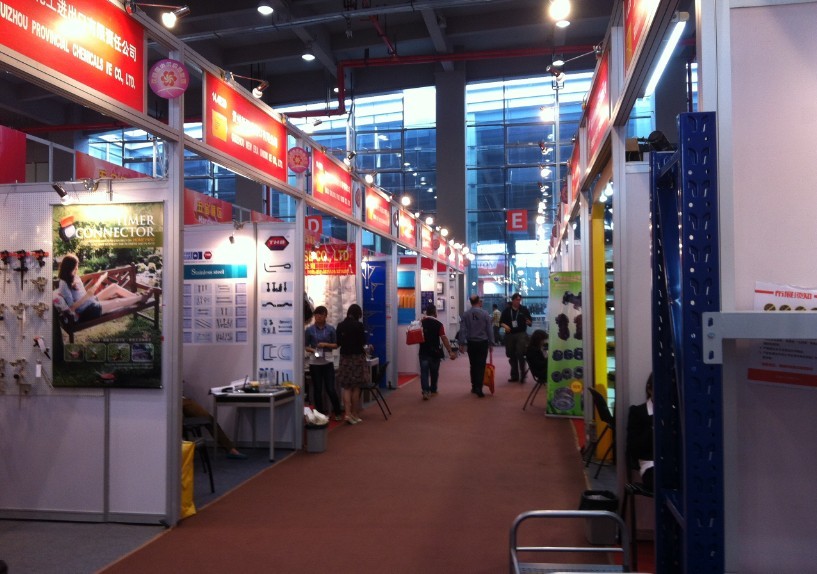
Procuring warehouse systems internationally requires careful balance between manufacturing savings and freight logistics. Racks are heavy, high-volume items that can quickly incur high freight costs if not designed for optimal container utilization.
At Aomeijia, our product development process focuses on optimization for transport:
• Modular Knock-Down Designs: We engineer base assemblies, bracing, and upright structures to nest closely inside standard shipping containers, maximizing freight density.
• Regulatory Alignment: Racking designs must align with regional safety standards. We manufacture structural elements compliant with FEM (Europe), ANSI/RMI MH16.1 (United States), and AS4084 (Australia) specifications.
• Supply Chain Stability: Leveraging partnerships with over 1,200 raw material and component suppliers, we secure high-grade steel at stable prices, helping mitigate global market fluctuations.
Answers to common structural engineering, custom manufacturing, and logistics questions.
Roll-formed racks are shaped from cold-rolled sheet steel, making them cost-effective and easy to adjust for light to medium-duty storage. Structural steel racks are made from hot-rolled channel sections, offering superior impact resistance and higher load capacities for heavy, demanding industrial environments.
Arm deflection is typically calculated using the equation for a cantilever beam under a uniform load, limiting vertical deflection to L/180 or L/240 of the arm length. This prevents dynamic binding and ensures stable clearances for lift trucks and automated stacker cranes.
We provide comprehensive engineering options including custom arm angles (straight, inclined, or with safety pins), upright column heights, column spacing, structural base depths, specific loading limits, custom paint matching, and zinc galvanizing for outdoor installations.
We use CAD nesting analysis to optimize how heavy and bulky components fit inside standard 40-foot containers. This ensures high load factors, keeps parts secure during transit, and reduces ocean freight costs per unit.
Durable storage and material handling solutions engineered for high performance in industrial facilities.
 AomeRack