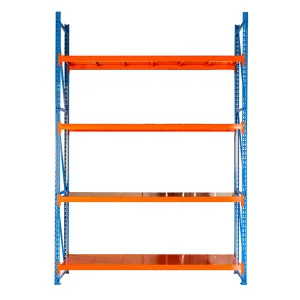
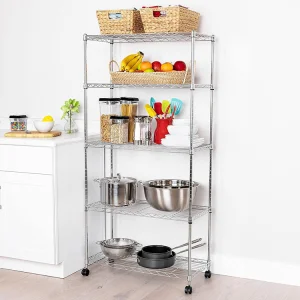
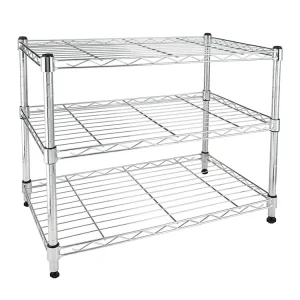
Premium warehouse shelving, custom wire mesh components, and adjustable heavy-duty rack assemblies certified to global standards.
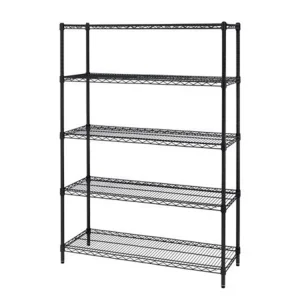
Founded in 2016, Guangdong Aomeijia Metallic Products Co., Ltd. is a global leader in designing, engineering, and manufacturing state-of-the-art warehouse storage racks, heavy-duty industrial shelving, pallet racking systems, and bespoke ODM/OEM metallic storage solutions.
Spanning an expansive, state-of-the-art production footprint of 28,000㎡, our facility integrates raw metal forming, precise automated welding, advanced electrostatic powder coating, and rigorous weight-load testing. Our commitment to quality control and structural optimization drives an annual export revenue of US$18 million, backed by over 12 years of industry experience and 8 years of international export pedigree.
Our operational philosophy is built on structural safety and configuration longevity. Every high-density racking unit is built using high-grade structural steel and processed via automated cold-rolling lines to ensure reliable material yield strength.
Factory Footprint
Annual Exports
Quality Inspectors
R&D Engineers
We currently manage a robust global distribution network catering to over 1,200 supply chain partners worldwide.
Understanding high-density LIFO systems designed to maximize floor space usage by up to 75% compared to selective rack systems.
Designed primarily for Last-In, First-Out (LIFO) material flow. Forklifts enter the racking bay directly to deposit or retrieve pallets, eliminating the need for dedicated service aisles between each frame.
By substituting access aisles for deep storage lanes, Drive-In systems yield up to 75% higher warehouse volume utilization, creating optimal solutions for temperature-controlled cold storage.
Constructed with structural top, back, and horizontal bracing to guarantee lateral stability. Integrated heavy-duty ground-level guides safeguard upright frames from forklift impact.
Unlike standard pallet racking where pallets rest on horizontal beams, drive-in systems utilize cantilevered support rails running the depth of the bay. The upright columns are configured with heavy-duty top tie beams and back bracing. Forklift operators drive directly into the bay interior and place pallets onto the continuous structural steel rails. This layout requires strict tolerance control and high-yield structural steel profiles to prevent column deflection under asymmetric loading conditions.
Aomeijia engineers utilize Finite Element Analysis (FEA) software to simulate load behavior across multiple tiers, calculating dynamic deflection parameters, wind load resistance for external setups, and seismic coefficients for earthquake-prone regions. This rigorous technical preparation translates to physical safety, protecting both personnel and inventory.
The rise of micro-fulfillment, cold chain logistics, and spatial footprint optimization drives the demand for industrial high-density storage.
Globally, cold storage warehousing space commands a significant premium due to the energy footprint required to maintain sub-zero temperatures. Industrial operators cannot afford to waste vertical or floor space on excess aisles. Consequently, drive-in racking is the primary structural choice for frozen food distributors, pharmaceutical logistics depots, and agricultural preservation facilities across North America, Europe, and Asia-Pacific markets.
Our OEM/ODM configurations provide rust-resistant galvanized steel components that withstand temperature cycling between ambient and -30°C without metal embrittlement or surface coat degradation.
With fast shipping timelines dominating global retail, distribution centers rely on buffer storage areas to stage high-velocity SKUs. Drive-in systems allow logistics managers to group homogenous product lines together, minimizing loading delays and maximizing vehicle dispatch frequency. As an export specialist, Aomeijia supplies tailored racking profiles that adapt to the various pallet formats used across North America (GMA), Europe (EPAL), and APAC markets.
How modern material science and automation are transforming passive drive-in racks into smart warehouse infrastructure.
Transitioning manufacturing processes to utilize Q355B and Q420 structural steel alloys. This allows thinner profiles to bear higher structural loads, increasing the overall clearance within rack bays for automated guided vehicles (AGVs).
Converting static drive-in bays into high-throughput Radio Shuttle systems. We design universal rail tracks that support both standard forklift placement and automated radio shuttles, offering clients a modular path toward automation.
Embedding smart load cells and acceleration sensors within upright bases and top braces to monitor dynamic structural deflection in real-time. This provides automated safety alerts if forklift impact or load limits are exceeded.
Tailored structural blueprints designed for specific industrial verticals, optimizing logistics performance and safety compliance.
For operations maintaining temperatures down to -35°C. Features hot-dip galvanized finishes, high-strength cold-resistant fasteners, and special safety rail configurations to prevent pallet slippage in high-frost environments.
Ideal for rapid turnover of food and beverages. Built with heavy-duty structural entrance guides, high-visibility hazard warning components, and double-anchored base plates to handle constant daily loading cycles.
Designed for dense, heavy loads of components. Integrates heavy-duty structural channels with custom load support arms to manage high-mass pallets without metal fatigue.
How Guangdong Aomeijia Metallic Products Co., Ltd. ensures reliability and engineering safety across our manufacturing pipeline.
At Aomeijia, structural safety is an absolute priority. Our quality inspection infrastructure is managed by a team of 45 professional inspectors operating under ISO-based quality management standards. We implement a rigorous three-tiered verification program prior to packaging and dispatch:
We verify every coil of steel for yield strength, thickness tolerance, and chemical composition compliance before forming.
Using non-destructive ultrasonic testing methods, we monitor weld penetration and structure fusion across upright connection brackets.
Prototype configurations undergo hydraulic load testing to measure structural deflection against FEM and RMI standards.
Coatings undergo cross-hatch adhesion and salt spray tests to ensure long-term durability in humid or chemical environments.
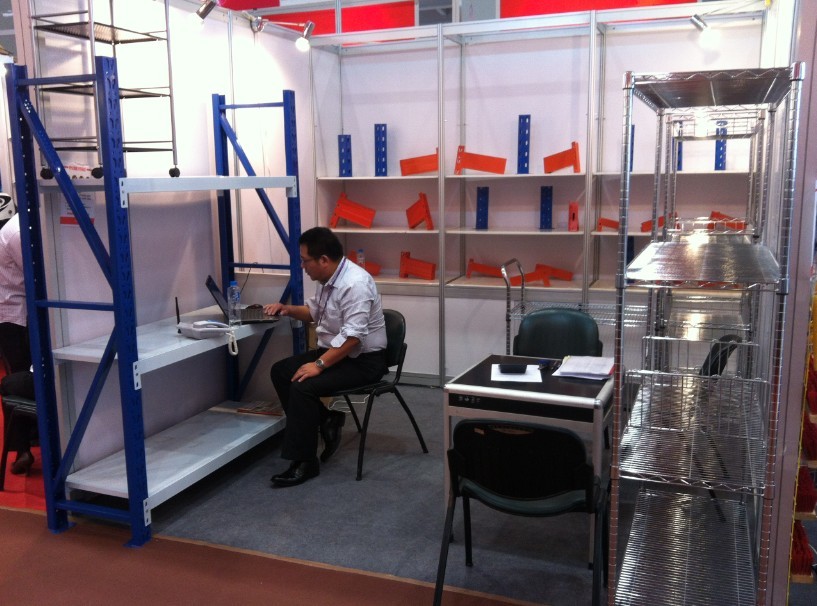
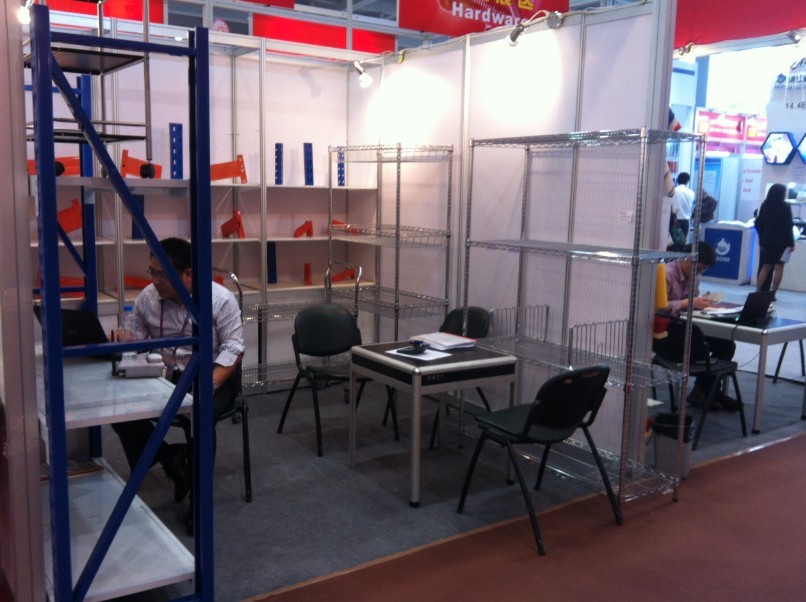
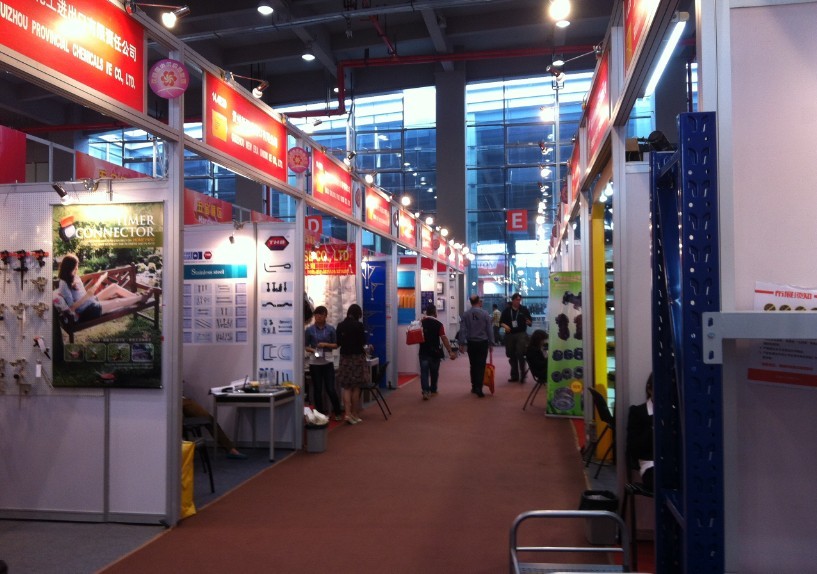
Showcasing our global footprint and industrial partnerships across leading trade exhibitions.
Technical guidance and answers for warehouse design engineers and industrial procurement professionals.
Drive-In racking uses a single entry/exit point for forklifts, operating strictly under Last-In, First-Out (LIFO) storage logic. Drive-Through racking features access points at both ends of the lane, allowing forklifts to enter from one side and exit the other, supporting First-In, First-Out (FIFO) material management. Drive-Through requires additional bracing considerations to maintain system stability without the rear cross bracing used in Drive-In racks.
Because forklifts drive inside the actual rack bays, columns are more susceptible to impacts. We address this safety concern by providing heavy-duty floor-mounted guide rails, steel column protectors (crescent or wrap-around styles), and high-visibility post protectors. Additionally, the bottom 1-2 meters of the upright frame can be reinforced with double-post columns for added resistance to impact energy.
We manufacture using certified Q235B and Q355B structural carbon steel. Our design methodologies and production tolerances comply with European FEM 10.2.07 standards, Rack Manufacturers Institute (RMI) specifications in the USA, and AS4084-2012 standards in Australia. Quality documentation and material mill certificates are provided with every order.
Yes. However, the system requires specialized seismic engineering. Our design team calculations adjust the steel profiles, baseplate dimensions, and ground anchor specs based on local seismic zone ratings. We add heavy-duty overhead structural portal beams to tie adjacent racking bays together, ensuring structural integrity during seismic events.
While the physical limits are higher, standard safety recommendations suggest designing Drive-In lanes to be 4 to 6 pallets deep and up to 4 or 5 tiers high. Lanes deeper than 8 pallets can increase forklift transit times and the risk of column contact. We customize the height and depth configurations based on client forklift models, mast heights, and operator vision aids.
Our OEM/ODM capabilities cover custom powder coating color matching, bespoke upright and beam profiles, custom load rail shapes, dynamic load test configurations, and custom seismic anchors. Our engineering team of 18 professionals collaborates with client architects to map out custom warehouse floor designs, supplying step-by-step installation guides for structural deployment.
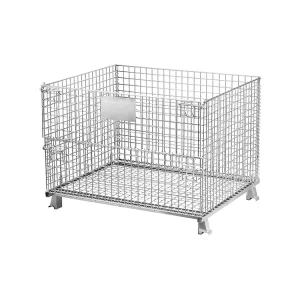
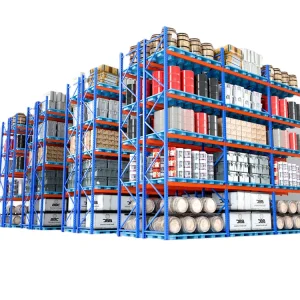
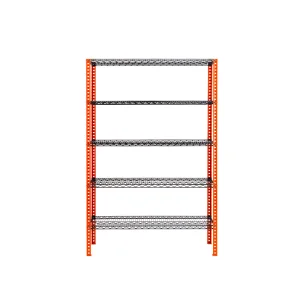
Explore our secondary lineup of heavy-duty industrial storage racks, pallet shelving, and commercial organization systems.
 AomeRack