Explore our engineering-focused product portfolio designed to scale structural efficiency in industrial warehouses, archives, and automated fulfillment hubs.
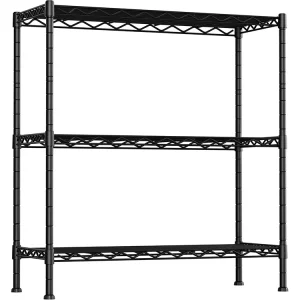
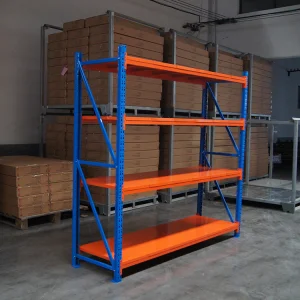
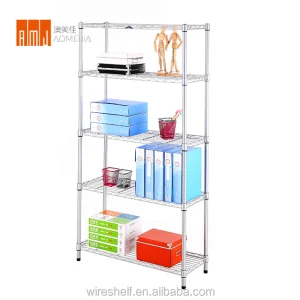
Modern commercial operations face unprecedented constraints: skyrocketing real estate prices, shifting customer order velocities, and the necessity to automate handling. Static storage solutions are no longer sufficient. Industrial mobile shelving systems and automated racking configurations provide the vital structural response to these challenges. By reducing static access aisles and dynamic floor space requirements, high-density mobile shelving systems can increase storage density by up to 100% while preserving access compatibility.
As a global B2B procurement partner, navigating the spectrum of exporters, compliance frameworks, and technological integrations is crucial. This whitepaper analyzes engineering metrics, supply chain strategies, local compliance, and structural specifications that define the dynamic landscape of modern logistics racking systems.
Across North America, Europe, and Asia-Pacific, warehousing and logistics real estate prices continue to rise. Industrial builders are building vertically, while facility managers are utilizing existing footprints to their absolute limits. In this macro context, static shelves represent underutilized space. Each access aisle represents dead volume that is heated, cooled, lit, and paid for by square meter.
Mobile shelving resolves this by moving row modules along floor-integrated or surface-mounted rail systems. Dynamic carriage control opens aisles only when required, enabling a massive consolidation of footprint space. This is especially critical in industries where climate control represents a substantial percentage of operating expenses (OpEx).
Reducing active volume inside cold-storage environments directly translates to energy conservation. Mobile configurations double the capacity inside refrigerated zones, maximizing return on investment (ROI) for temperature-sensitive goods.
Municipalities, hospitals, universities, and corporate legal departments utilize compact mobile shelving to preserve vast paper archives, records, and historical artifacts in secure, fire-rated, compact spaces.
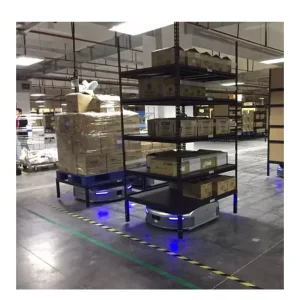
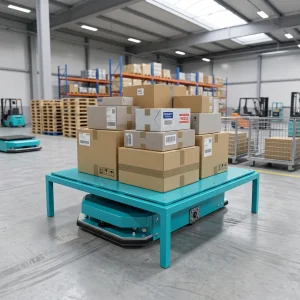
The rise of e-commerce requires fast fulfillment inside urban centers. Mobile units configured for automated guided vehicles (AGVs) allow automated shuttles to transport material racks to picking stations directly, reducing manual travel time.
The progression of mobile shelving systems is marked by three clear design iterations, shifting from fully manual operation to high-end automated robotic integration:
| System Class | Drive Mechanism | Typical Payload / Bay | Primary Target Applications | Safety Integration Levels |
|---|---|---|---|---|
| Manual Mechanical Assist | Handwheel, chain drive, reduction gear ratio | 500 kg – 1,500 kg | Office archives, retail backroom, lightweight parts | Mechanical safety locks, manual stop switches |
| Electric Dynamic Mobile | AC/DC gearmotors, PLC-driven rail propulsion | 2,000 kg – 5,000 kg | Heavy industrial parts, general warehousing | Photoelectric barriers, floor pressure sensors, E-stops |
| AGV & AMR Dynamic Racks | Independent robots, automated alignment tracks | 500 kg – 2,000 kg | Smart logistics hubs, high-throughput e-commerce | LiDAR, obstacle bypass sensors, IoT centralized software |
The frontier of high-density storage lies in software-driven automation (WMS/WCS). Instead of static rails, future configurations utilize autonomous robot bases to move shelves freely on flat concrete floors. Modern configurations utilize wireless IoT systems to continuously report weight distribution, shelf occupancy levels, and internal structural stress. As factories move toward full automation, these modular smart storage racks will interface seamlessly with robotic picking arms and conveyor systems.
The global steel storage industry relies on China's comprehensive manufacturing ecosystem for its raw material efficiency, precision manufacturing, and capacity scaling. At the center of this sector is Guangdong Aomeijia Metallic Products Co., Ltd.
Established in 2016, Aomeijia operates a sprawling, high-capacity factory spanning 28,000 square meters. With 12 years of industry experience in warehouse equipment manufacturing, we have built a stable supply chain and advanced automated production line. This lets us service large-scale infrastructure projects while keeping lead times short.
By partnering with over 1,200 verified supply chain partners, we secure high-grade cold-rolled steel coils, certified hardware, and quality powder coatings at predictable pricing, insulating international buyers from market volatility.
Our quality department is staffed by 45 dedicated quality inspectors. We implement rigorous testing protocols, including load-deformation analysis, coating thickness testing, weld testing, and dimensional verification.
With 18 professional R&D engineers, we design customized solutions for unique warehouse configurations. We introduce approximately 120 new products and optimized storage designs annually to keep up with industry trends.
Deploying structural steel systems in different countries requires adherence to local building codes, fire regulations, and occupational safety frameworks. Buying from an exporter requires attention to these localization requirements:
Quality control at Guangdong Aomeijia isn't just an inspection phase; it is integrated into our entire production flow. Our quality management system covers every stage of manufacturing:
| Inspection Phase | Test Parameters Checked | Standards and Equipment Used | Acceptance Criteria |
|---|---|---|---|
| Raw Material Incoming | Yield strength, chemical composition, thickness tolerance | Spectrometer testing, micrometers | Within mill specification sheet limits |
| Welding Verification | Structural weld penetration, gas pocket detection | Ultrasonic weld testing, stress testing | No micro-cracking; uniform penetration profiles |
| Surface Protection | Powder coat thickness, adhesion, salt spray resistance | Electronic coating thickness gauges, cross-hatch testing | Smooth coverage, minimum thickness: 60-80 microns |
| Load Testing | Deflection under limit state and maximum design loads | Hydraulic pressure test rigs | Max deflection < L/240 of the beam length |
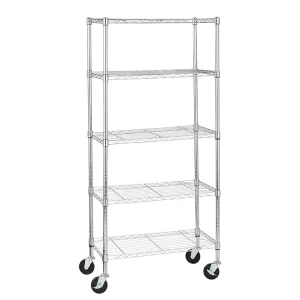
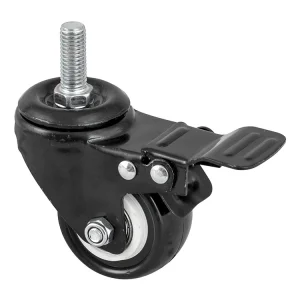
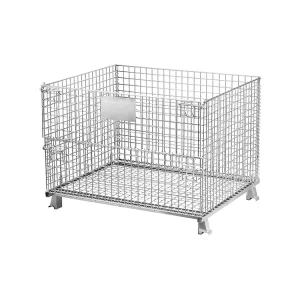
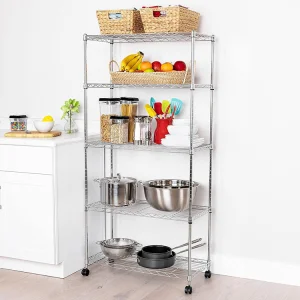
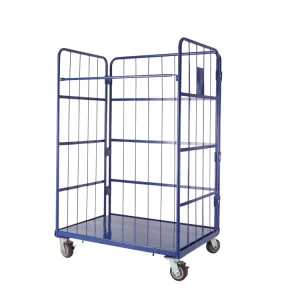
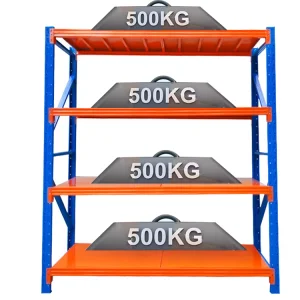
Complete your facility planning with specialized automation bases, heavy-duty shelving configurations, and mobile transport components.
 AomeRack