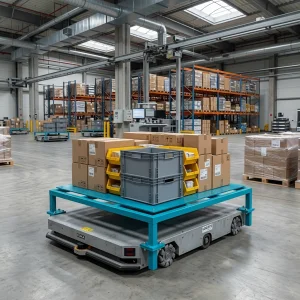
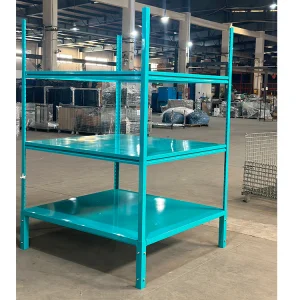
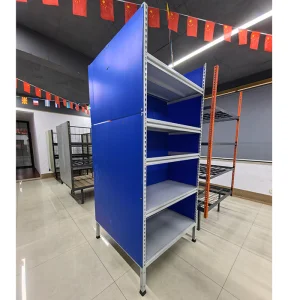
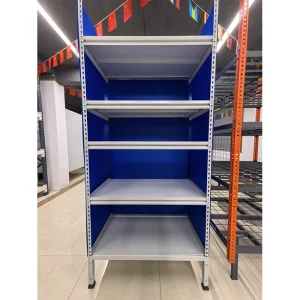
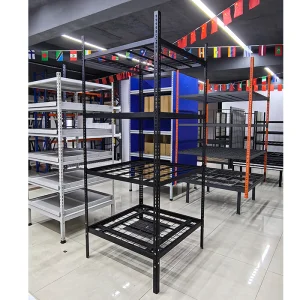
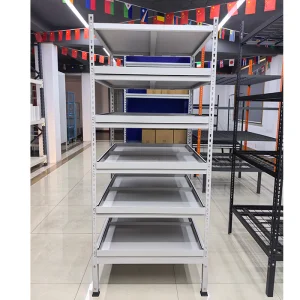
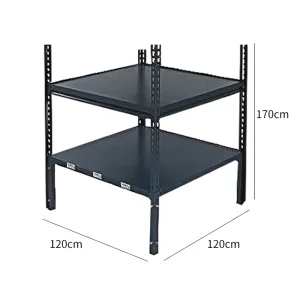
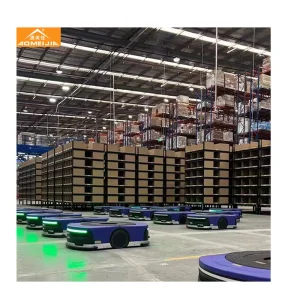
Precision-engineered, heavy-duty mobile AMR/AGV shelving systems customized for the Chubu region's advanced automotive manufacturing and smart logistics infrastructure.
Send Inquiry NowFeaturing our premier selection of AGV and AMR-compatible rack interfaces designed for maximum compatibility with international and Japanese automation standards.
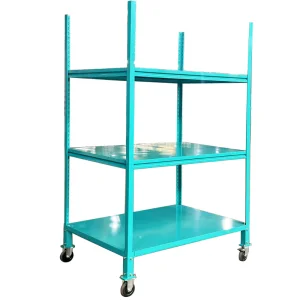
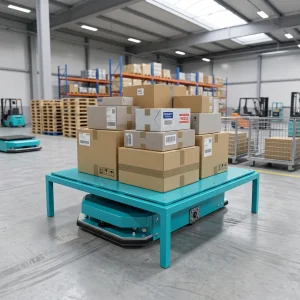
Why the capital of Aichi Prefecture requires specialized structural storage solutions for automated vehicle fleets.
Nagoya and the surrounding Aichi Prefecture represent the absolute epicentre of Japan's automotive, aerospace, and precision machinery industries. Host to manufacturing giants and their Tier 1 suppliers, the region is rapidly transitioning from traditional storage layouts to highly automated, dark warehouses. In this ultra-competitive industrial landscape, Automated Guided Vehicles (AGVs) and Autonomous Mobile Robots (AMRs) are no longer optional—they are critical to mitigating Japan's structural labor shortages.
However, the Nagoya industrial market presents unique challenges. Factories and distribution centers must maximize vertical and volumetric efficiency while maintaining stringent safety standards under Japanese building codes and seismic regulations. Standard, low-tolerance pallet racks fail when integrated with high-speed automated fleets. AGV guidance systems demand micro-millimeter precision in shelf level flatness, structural rigidity under acceleration, and specialized floor-docking profiles. As a premier exporter to Japan, Guangdong Aomeijia Metallic Products Co., Ltd. customizes heavy-duty AGV racks to match these exact localized requirements.
Engineered for high-frequency transport of heavy automotive components, stamping dies, and sub-assemblies common in Nagoya's industrial parks.
Robot-applicable racks with strict dimensional consistency, preventing sensor misalignment or docking failures for LiDAR and QR-code guided AGVs.
Utilizing high-tensile structural steel coated with ESD-safe powder coatings to prevent static interference with sensitive robotic components.
How we design AGV racks to withstand Japan’s stringent earthquake safety regulations.
For any storage system deployed in Nagoya, seismic resilience is the primary engineering constraint. Our R&D engineering division utilizes finite element analysis (FEA) to simulate localized seismic activities based on Japan's Building Standards Act (Kenchiku Kijun-hō). The mobile AGV racks are structural elements that dynamic robots must lift, carry, or dock with. Hence, the center of gravity (CoG), dynamic deflection ratios, and structural dampening characteristics are carefully calculated.
Guangdong Aomeijia Metallic Products Co., Ltd. incorporates structural features like reinforced base plates, heavy-duty boltless beam-to-upright connectors, and anti-toppling linkages. Our systems are engineered to prevent deflection under full payload capacities, ensuring that robotic drive wheels maintain optimal traction and orientation during sudden directional changes.
| Structural Parameter | Standard Specification | Nagoya Market Customization Option |
|---|---|---|
| Material Grade | Q235B / Q355B Structural Carbon Steel | Equivalent to JIS G3101 SS400 / High-Tensile Options |
| Flatness Tolerance | ±2.0 mm per rack unit | Within ±1.0 mm for high-precision AMR docking |
| Seismic Acceleration Resistant | 0.2g static lateral load | Designed up to 0.45g (Chubu area seismic zone standards) |
| Surface Finish | Epoxy Polyester Powder Coating | Electrostatic Dissipative (ESD) Anti-Static Coating |
| Base Plate Thickness | 4.0mm - 6.0mm | Reinforced anchor-welded bases for Japanese standard slab anchors |
Streamlined manufacturing, customized design parameters, and optimized international logistics for global system integrators.
Global logistics companies, e-commerce giants, and automation system integrators face significant hurdles when sourcing warehouse hardware across borders. Shipping bulk steel requires optimized space utilization, while on-site assembly must be rapid and error-free to control installation costs. Our industrial AGV shelf systems utilize modular, knockdown structures. This design reduces container shipping volumes by up to 40% while enabling local teams to assemble the racks with standard tools, requiring zero specialized welding on the warehouse floor.
By coordinating directly with AGV manufacturers (covering latent navigation methods like QR code tracking, magnetic tape, inertial navigation, and SLAM LiDAR), Aomeijia ensures the racking steelwork does not obstruct the robot's optical sensors or wireless telemetry. We provide complete layout planning and customized dimensions to match specific fleet specifications, whether utilizing under-rider lift AGVs, forklift AGVs, or dynamic sorting AMRs.
Your trusted manufacturing partner for ISO-certified industrial storage systems and AGV interface components.
Established in 2016, Guangdong Aomeijia Metallic Products Co., Ltd. has grown into a leading developer of high-efficiency warehouse storage solutions. Spanning an expansive 28,000 square meters factory site, we coordinate raw material sourcing, heavy-gauge rolling, automated robotic welding, and automated powder coating processes under one unified quality management protocol. With over 12 years of industry experience and 8 years of global export experience, we have generated an annual export revenue of US$18 million, shipping high-capacity storage racks to North America, Europe, Southeast Asia, the Middle East, Australia, and South America.
We implement a strict quality control matrix. Our inspection processes cover the entire manufacturing lifecycle, including ISO-based quality management, raw material mill-test checks, automated welding penetration testing, powder coating dry film thickness (DFT) checks, load-bearing stress tests, and final tolerance verifications. Our 45 professional inspectors and 18 dedicated engineers work constantly to deliver storage structures that integrate seamlessly with the world's most advanced robotic fleets, launching over 120 new products and optimized storage designs annually to meet the rapid iterations of global automated warehousing.
Where physical racking infrastructure meets IoT and Next-Generation Autonomous Systems.
As the logistics sector transitions from basic automated guided vehicles to highly decentralized, swarm-intelligent autonomous mobile robots (AMRs), our structural designs are evolving accordingly. We are currently testing secondary sensor integration structures that permit direct mounting of localized distance sensors, dynamic weight measurement units, and passive RFID tracking labels directly onto rack frame members. This turns static steel assemblies into interactive components of the digital warehouse control system (WCS).
Additionally, we are exploring weight-reduction strategies. By utilizing micro-alloyed, high-yield steel profiles, we can reduce overall tare weight of mobile racks by 15-20% without compromising structural integrity or load-carrying capacity. Lower rack weights reduce robot battery drain, maximizing fleet duty cycles and improving operational throughput in high-throughput distribution environments.
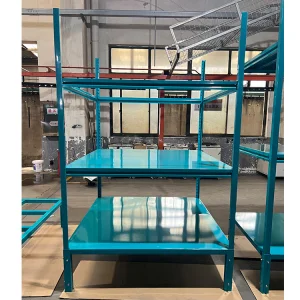
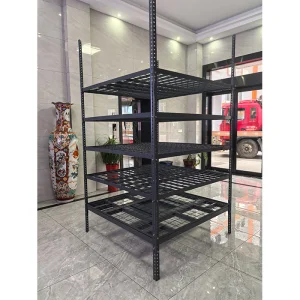
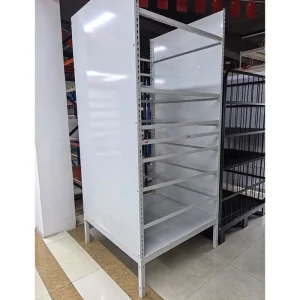
Heavy-duty, precision-fabricated storage systems compatible with under-rider robots, automated forklifts, and mobile pick carts.
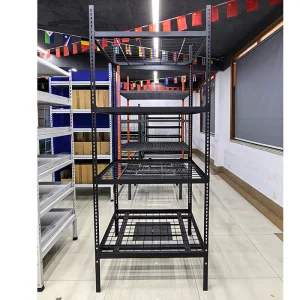
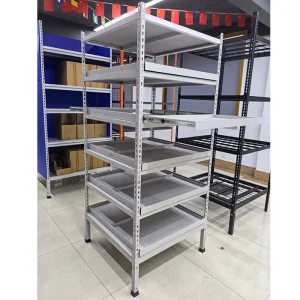
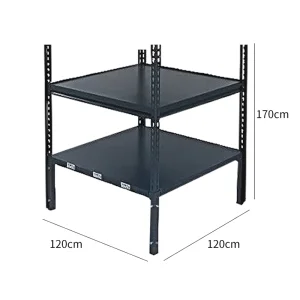
Ensuring trouble-free customs clearance, regulatory approval, and structural certification for Japanese site installations.
Operating a warehouse system in Nagoya requires compliance with local structural standards. At Aomeijia, we simplify import compliance by aligning our quality systems with international guidelines. Our factory operations undergo strict testing protocols, utilizing a team of 45 professional quality inspectors who audit raw materials, verify weld integrity, check coating thickness, and conduct load stress tests before shipping.
We supply necessary documentation, including material mill sheets, loading capacity verification calculations, and chemical coating certificates. This documentation assists local Japanese engineering firms and safety coordinators in securing municipal approvals. Our long-term relationships with over 1,200 supply chain partners ensure that our raw material costs remain stable, allowing us to offer predictable pricing and clear delivery timelines to our Japanese customers.
Technical answers to key inquiries regarding AGV rack specification, deployment, and customization in Nagoya.
Yes. Our engineering division works with local structural calculation consultants to configure rack frames and anchor systems to meet Japanese seismic zone acceleration parameters (up to 0.45g dynamic horizontal force requirements, depending on building structure and slab performance).
Absolutely. We regularly coordinate dimensions, under-clearances, location pins, visual guidance markings, and robot-to-frame clearances with leading AGV developers. We provide tailored manufacturing profiles based on your robotic fleet's lifter dimensions and sensor requirements.
Our ISO-certified manufacturing facility features automated roll-forming and robotic welding machinery. We monitor tolerances throughout production, maintaining length and width variations within +/-1.0mm per module, ensuring reliable docking performance for autonomous fleets.
Depending on order volume and level of customization, standard production takes 25 to 35 days. Direct shipping from our southern China production facility to the Port of Nagoya takes approximately 4 to 7 days, ensuring competitive transit times.
Yes. For electronics, semiconductor, and high-performance automotive component warehouses, we offer ESD-safe powder coatings that prevent static buildup and protect robot sensors and payloads.
 AomeRack