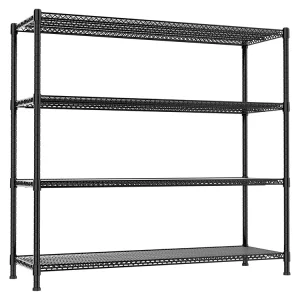
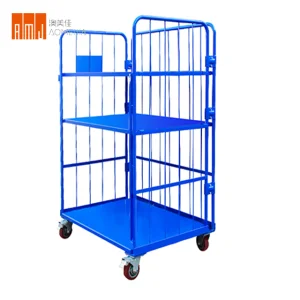
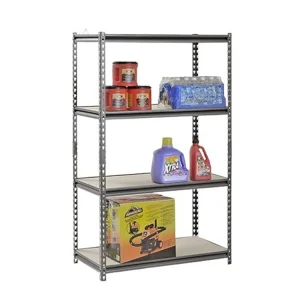
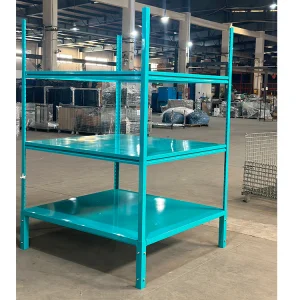
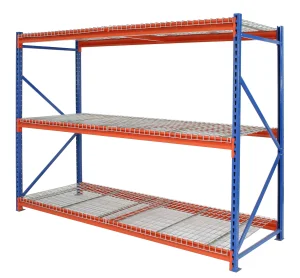
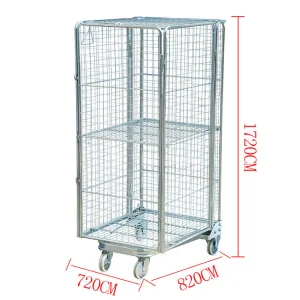
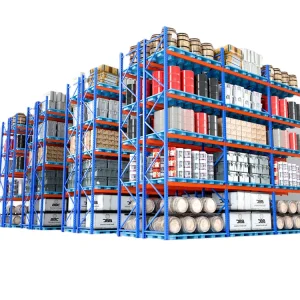
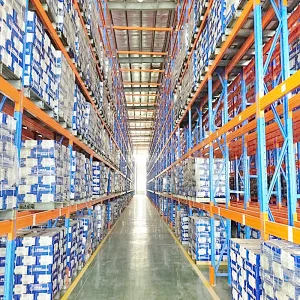
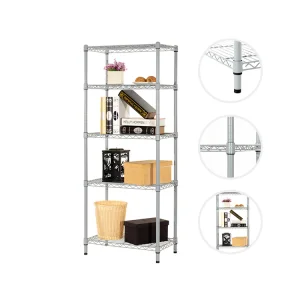
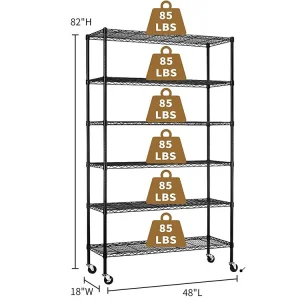
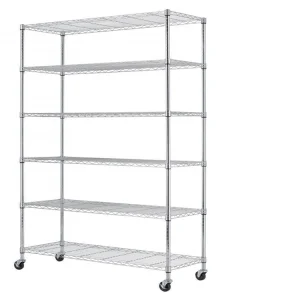
Explore our foundational storage technologies, custom-engineered for maximum loading efficiency and modular system integration.
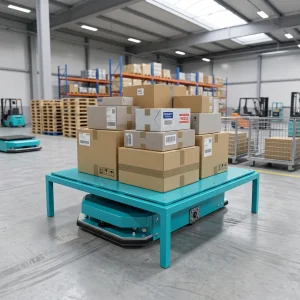
In the era of rapid logistics growth, supply chain operators face the continuous challenge of maximizing storage space while reducing handling times. CE Certified Radio Shuttle Storage Systems, also known as pallet shuttle systems, present a semi-automated high-density storage paradigm that bridges traditional static racking and complex automated storage and retrieval systems (AS/RS).
Unlike conventional drive-in systems where forklifts must enter the racking aisles to retrieve pallets, a radio shuttle rack uses an independent shuttle cart propelled by electric motors to transport pallets along dynamic guide rails. This keeps the forklift out of the structure, reducing structural collision hazards, minimizing structural wear, and improving throughput by over 100%.
Choosing a CE Certified manufacturer is essential for safety, operational reliability, and compliance. In Europe and the Americas, compliance with safety directives like the CE Machinery Directive 2006/42/EC is required. This certification ensures the system is constructed with the structural strength, electrical safeguards, and emergency stop systems required to mitigate hazards during continuous warehouse operations.
By using precision cold-rolled structural steel profiles (such as Q235B or Q355B), these systems handle loads from 500kg up to 1500kg per pallet position, while tolerating the complex horizontal dynamics of shuttle cart acceleration and deceleration.
A high-performance radio shuttle racking system relies on structural calculations, precise manufacturing tolerances, and electrical configurations. The table below outlines the industrial specifications of a standard heavy-duty radio shuttle racking system designed in compliance with European FEM 10.2.02 and CE standards.
| System Component / Parameter | Industrial Standard Specification | E-E-A-T Quality Compliance Metric |
|---|---|---|
| Raw Structural Steel Grade | Q235B / Q355B structural carbon steel | Ultrasonic weld testing & structural elasticity analysis |
| Load Capacity Per Pallet | 500kg up to 2,000kg per position | Validated by static & dynamic load testing under 1.5x overload factors |
| Pallet Shuttle Speed | Unloaded: 1.0 - 1.2 m/s; Loaded: 0.7 - 0.9 m/s | Proportional acceleration and deceleration limits to prevent shifting |
| Battery Chemistry & Autonomy | Lithium Iron Phosphate (LiFePO4) - 24V / 48V | Up to 10 hours continuous operation, with cold storage options down to -25°C |
| Safety Sensor Integration | Obstacle-detecting laser scanners & photo-electric sensors | Class 1 Laser safety rating, meeting CE Machinery Directive 2006/42/EC |
| Guide Rail Tolerance | Linear structural variance within ±1.0 mm per 10m | Precise multi-stage rolling to avoid shuttle cart vibration |
For operations, the structural layout is engineered to fit both FIFO (First-In, First-Out) and LIFO (First-In, Last-Out) setups. Aomeijia’s design engineers use advanced structural stress analysis software to run simulated structural profiles under dynamic seismic loads. This ensures structural integrity when installed in seismic zones across North America and South America.
The global shift toward warehouse automation has increased the demand for CE Certified Radio Shuttle Storage systems. Procurement departments at multinational logistics firms, e-commerce giants, and cold chain operators are moving away from standard racking systems in favor of modular semi-automated setups. These systems offer significant benefits in space optimization, density, and safety, making them a key consideration for strategic sourcing.
Purchasers in the United States and Canada require compliance with ANSI/RMI MH16.1 structural engineering regulations. They focus on structural safety under seismic forces, requiring high-grade steel profiles with structural calculation documentation that ensures compliance with local OSHA mandates.
For EU operations, compliance with EN 15095 (Power-operated mobile racking systems) and the CE Mark is mandatory. Procuring organizations prioritize automated electrical systems, low-temperature durability for cold stores, and structural safety parameters (EN 15512).
With rapid urban development and rising land costs in the APAC region, companies seek high-density warehouse systems that can easily scale. Integration with existing AGVs (Automated Guided Vehicles) and AMRs (Autonomous Mobile Robots) is often a core technical requirement.
Guangdong Aomeijia Metallic Products Co., Ltd. serves these international requirements through OEM and ODM partnerships. By maintaining supply chain relations with more than 1,200 partners, we provide competitive pricing and steady raw material sourcing to minimize delivery times for large-scale industrial projects.
Established in 2016, Guangdong Aomeijia Metallic Products Co., Ltd. has grown into a leading manufacturer of warehouse storage racks and industrial shelving systems. Our 28,000㎡ factory operates advanced production and quality management processes to ensure our systems meet international standards.
With over 12 years of storage industry experience, our engineering and R&D teams design layouts tailored to client specifications. Supported by 18 R&D engineers, we launch up to 120 new product designs and system optimizations annually, keeping pace with changes in logistics technology.
Our quality control process is integrated at every stage, including raw material inspections, automated robotic welding verification, powder-coating thickness analysis, and structural deflection testing. A team of 45 quality inspectors ensures that only certified materials leave our facility.
Our international operations are backed by 8 years of export history and an annual export value of $18 million. We supply system integrators, warehouse operators, and industrial contractors in North America, Europe, Southeast Asia, the Middle East, Australia, and South America.
We work closely with logistics teams and structural engineers from concept to installation. Every design undergoes load testing to confirm performance under actual operating conditions before shipping.
As modern warehousing transitions toward fully automated distribution centers, the engineering behind radio shuttle storage systems is also evolving. Future growth focuses on integrating these systems into broader digital ecosystem strategies.
Modern radio shuttle systems are designed to interface directly with Warehouse Management Systems (WMS) and Warehouse Control Systems (WCS). This connectivity enables real-time tracking of inventory, automated stock rotation, dynamic lane optimization, and preventative maintenance scheduling based on cycle usage. This direct data sharing minimizes order cycle times and reduces administrative overhead.
The next major step in warehouse design is the direct handoff between radio shuttles and Autonomous Mobile Robots (AMRs) or laser-guided AGVs. Instead of relying on manual forklift operators to transfer pallets from the rack face to the shipping dock, AGVs retrieve pallets directly from the shuttle rails, enabling fully automated, 24/7 dark warehouse operations.
Environmental sustainability is also driving design changes. Manufacturers are using recycled structural steel, low-VOC powder coatings, and energy-recovery braking systems in shuttle carts to reduce carbon emissions and alignment with LEED and ESG certification criteria.
Select from our premium automated systems and heavy-duty storage configurations to optimize your facility's layout.
 AomeRack