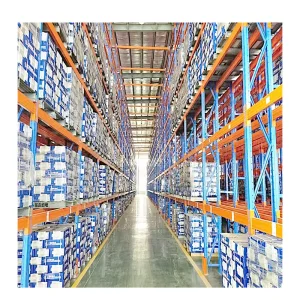
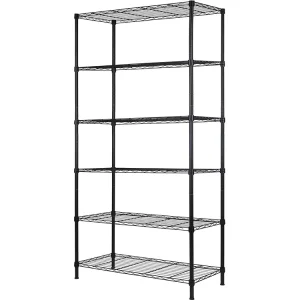
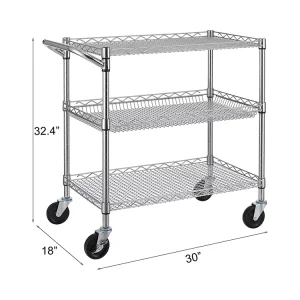
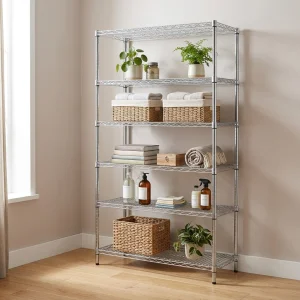
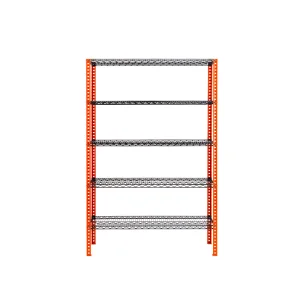
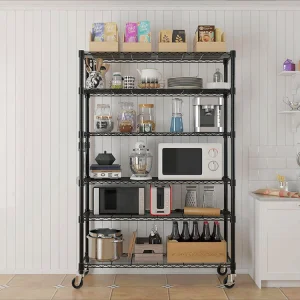
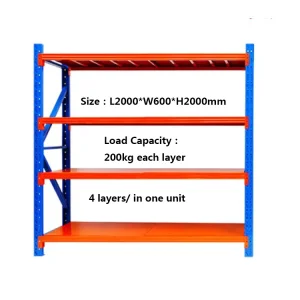
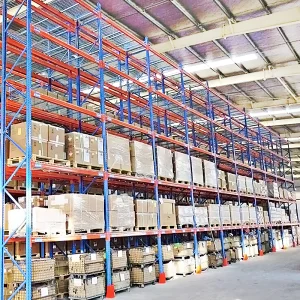
Industrial grade structural integrity designed for seamless workflow automation and optimized load distribution.
An Industrial Whitepaper on Gravity-Driven Intralogistics Efficiency and Global Supply Chain Sourcing
In the modern era of high-velocity supply chains, warehouse footprint maximization and dynamic material flow are no longer optional luxuries—they are core competitive requirements. Pallet Flow Storage, also commonly referred to as gravity flow racking, stands as the pinnacle of dense, FIFO (First-In, First-Out) inventory control. By utilizing inclined wheel tracks or roller lanes integrated into structural heavy-duty steel frameworks, this dynamic storage architecture allows pallets to glide effortlessly from the loading face to the picking aisle via gravity.
Traditional static racking solutions often require wide access aisles, resulting in underutilized cubic space and high operational overhead. Conversely, OEM/ODM Pallet Flow systems compress warehouse footprints by up to 60% compared to standard selective racking. This reduction is achieved by eliminating multiple intermediate aisles, creating a solid block of dynamic storage lanes that naturally enforce inventory rotation. This is critical for time-sensitive, temperature-controlled, and high-turnover cargo, such as consumer packaged goods (FMCG), agricultural produce, cold-chain pharmaceuticals, and automotive components.
As a leading supplier in global intralogistics, Guangdong Aomeijia Metallic Products Co., Ltd. engineered this whitepaper to provide supply chain managers, warehouse operators, and logistics engineers with the technical criteria, strategic trends, and factory insights needed to source, customize, and deploy heavy-duty structural pallet flow solutions at scale.
How macro-economic shifts shape the technical demands of international buyers and systems integrators.
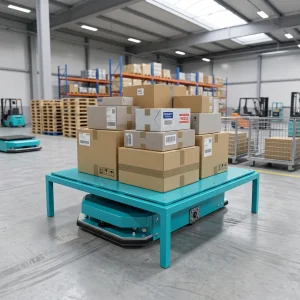
Integration with Automated Storage and Retrieval Systems (AS/RS) and AGV/AMR warehouse vehicle arrays. Pallet entry guides and alignment channels must feature tight tolerances to support robotics.
Adherence to RMI (Rack Manufacturers Institute) standards, FEM 10.2.02, and European EN 15512 codes. Buyers demand structural steel certified for high-load capacity and seismic stability.
Self-regulating centrifugal speed controllers, impact-resistant drop gates, and heavy-gauge split rollers designed to prevent lane lockups and operational delays.
Procurement teams evaluate lifetime durability, corrosion-resistant hot-dip galvanization or premium powder coatings, and modular lane replacement capability.
A trusted global leader in structural manufacturing, industrial metallurgy, and customized logistics infrastructure.
Established in 2016, Guangdong Aomeijia has quickly become an industry benchmark for state-of-the-art storage rack engineering. Spanning a massive 28,000㎡ factory footprint, we oversee every step of the supply chain—from premium steel coil sourcing and precision slitting to automated roll forming, robotic welding, and high-performance powder coating lines.
Backed by over 12 years of industry experience in warehouse equipment manufacturing and 8 years of international export operations, we serve an elite client base spanning North America, Europe, Southeast Asia, the Middle East, Australia, and South America. With a stable network of over 1,200 supply chain partners, we guarantee cost-efficiencies and reliable raw material sourcing, even during volatile market cycles.
Our dedicated team of 18 professional R&D engineers releases approximately 120 new products and optimized storage designs annually. This ensures that every pallet flow system we supply incorporates the latest mechanical and metallurgical innovations.
The mechanics of gravity, friction, and kinetic control in structural steel racking.
To prevent runaway loads, self-regulating brake rollers are installed at predefined intervals (typically one brake roller per pallet position). As the pallet's descent speed increases, internal weights inside the controller expand outward, applying frictional resistance to keep transit speeds below a safe 0.3 meters per second.
At the unloading face, the line pressure from accumulated pallets can make individual retrieval hazardous or cause forklift damage. Aomeijia designs custom mechanical drop-gate separators that isolate the front pallet from the rest of the queue. The rear pallets are released to slide forward only after the front pallet is fully cleared.
Our frame components are manufactured from premium Q235B or Q355B cold-rolled structural steel, ensuring structural integrity under loads up to 1,500 kg per pallet position. Columns feature specialized teardrop or box-profile structures to prevent bucking or buckling under severe impacts.
Every dynamic warehouse requires a customized solution tailored to its specific logistics profile. Key design parameters computed by Aomeijia engineers include:
How we guarantee reliability, structural safety, and high-caliber engineering for global supply chains.
We utilize a comprehensive quality team of 45 professional inspectors who monitor raw materials, weld integrity, and coating consistency. Dimensional accuracy inspections, ultrasonic welding strength tests, and surface coating thickness verifications (minimum 60 microns) are executed for every batch.
Before shipping, rack designs are subjected to structural strain gauge analysis, dynamic impact testing, and long-term cycle testing of speed controllers and gravity rollers. This ensures performance reliability over years of high-volume cycling.
A look at Aomeijia's next-generation storage innovations.
Optimized entry flares and self-centering frame plates designed specifically for automated reach trucks and automated guided vehicles (AGV/AMR), ensuring automated pallet placement without lane damage.
Formulating self-lubricating high-density polymer wheels and hybrid composite rollers to reduce rolling friction, lower required lane slopes, and increase maximum rack heights.
Currently in development: Wireless speed-control rollers equipped with thermal and rotational sensors to report flow issues and real-time lane occupancy status to Warehouse Management Systems (WMS).
Technical guidance and purchasing answers from our engineering support team.
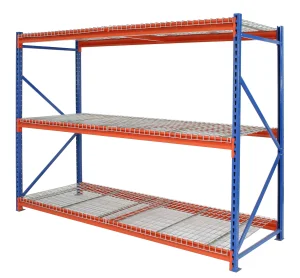
Complete warehouse shelving systems and high-capacity racking configurations built for industrial applications.
 AomeRack