Explore our heavy-duty engineering excellence, certified by international safety standards including NSF. Engineered for high-density dynamic storage, logistics hubs, and industrial automation.
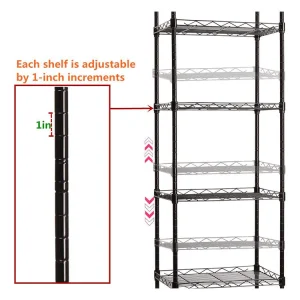
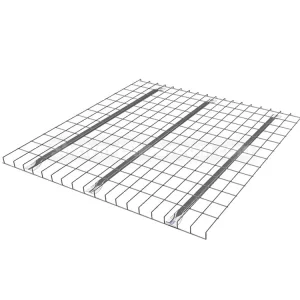
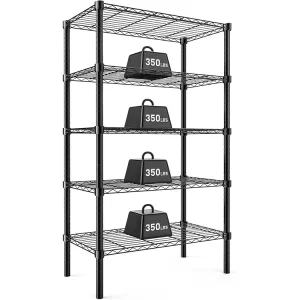
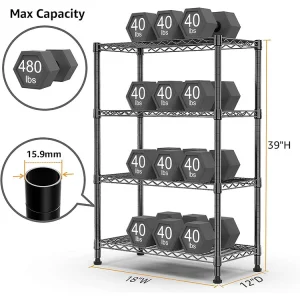
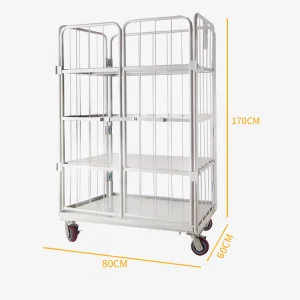
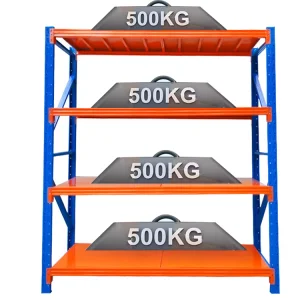
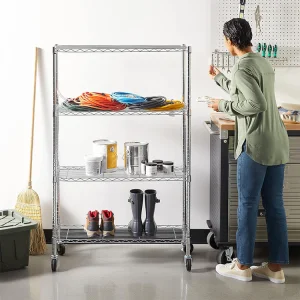
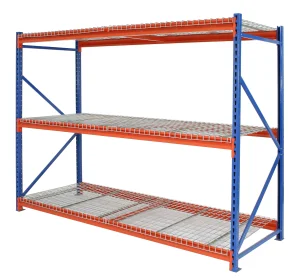
In the era of hyper-optimized supply chains, global distribution centers, and automated inventory management, traditional static shelving is rapidly giving way to dynamic solutions. Live storage racks (also frequently referred to as gravity flow racks, pallet flow systems, or carton flow systems) represent the peak of high-density storage innovation. Utilizing a slightly inclined structure combined with heavy-duty roller tracks or skate wheels, live storage racks harness the power of gravity to automatically slide pallets or cartons from the loading (loading phase) face to the picking (unloading phase) face.
This FIFO (First-In, First-Out) capability is critical for industries managing expiry-sensitive merchandise, high-turnover consumer goods, and just-in-time (JIT) manufacturing assemblies. According to recent supply chain analysis, transitioning from standard pallet racking to a fully optimized dynamic live storage system can reduce floor space requirements by up to 45% to 60% while simultaneously boosting order picking efficiency by 150%. This report outlines the technical standards, global supply chain metrics, and manufacturing landscape for procurers searching for elite storage system exporters.
Establishing global standards in metallic fabrication, custom storage engineering, and heavy-duty structural warehouse equipment since 2016.
Operating from a state-of-the-art 28,000㎡ factory, integrating raw material processing, automated welding, multi-stage coating, and precision testing under one roof.
Backed by 45 professional QC inspectors conducting weld strength validation, load capacity testing, coating thickness checks, and dimensional verification.
An elite crew of 18 structural engineers introducing over 120 optimized solutions annually, providing tailored designs for complex warehousing layouts.
Guangdong Aomeijia Metallic Products Co., Ltd. handles large-scale commercial contracts globally. Our annual export revenue averages US$18 million, backed by over 12 years of industry experience and 8 years of direct export history. We implement strict quality control procedures throughout the entire production process. Our quality inspection system includes ISO-based quality management, raw material inspection, welding inspection, coating thickness testing, load-bearing tests, and finished product inspection. Every rack system is tested according to dimensional accuracy inspection, welding strength testing, surface treatment inspection, and load capacity verification before shipment.
With a strong international trade background, we have extensive experience serving global customers through OEM and ODM cooperation. Our products are exported to markets including North America, Europe, Southeast Asia, the Middle East, Australia, and South America. We have established long-term cooperation with more than 1,200 supply chain partners, allowing us to provide stable raw materials, efficient production capacity, and competitive pricing for customers worldwide. Our main customers include warehouse operators, logistics companies, e-commerce businesses, retailers, wholesalers, distributors, system integrators, and industrial project contractors.
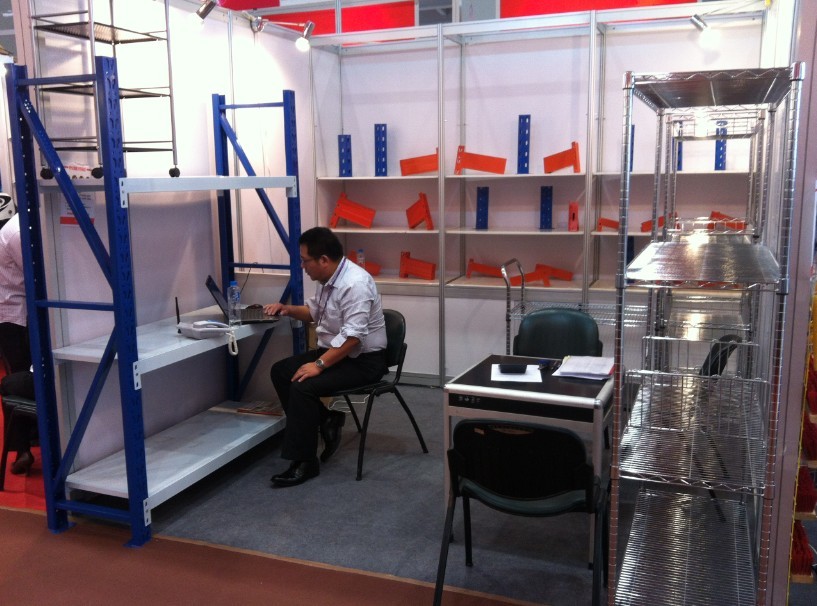
Global Outreach - Canton Fair
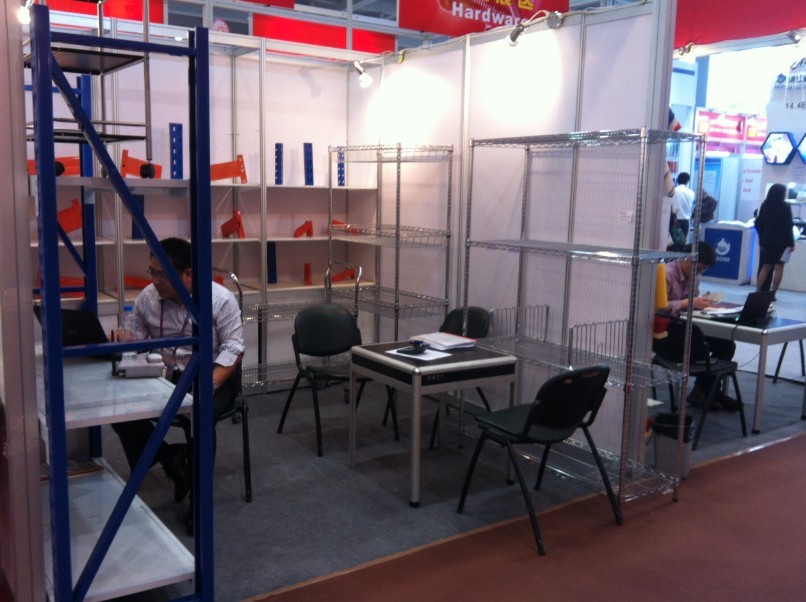
Customer Engagement - Canton Fair
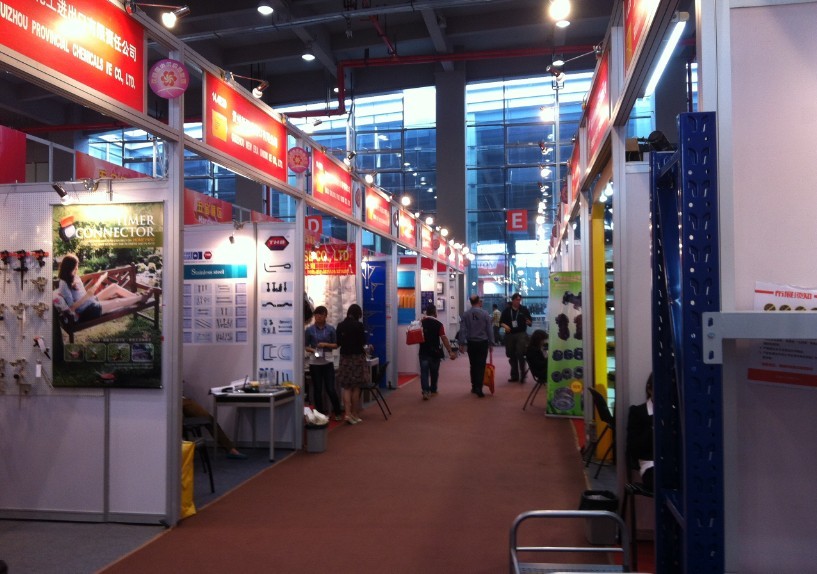
Industrial Showcases - Canton Fair
When selecting a Tier-1 partner for dynamic flow storage, procurement directors must evaluate manufacturers based on specific structural and mechanical benchmarks. Unlike static shelving, live storage racks contain moving components (rollers, speed controllers, separating plates) and are subject to continuous dynamic forces. Here is the evaluation rubric used by professional system integrators:
Premium manufacturers construct frames from structural carbon steel conforming to European standards (such as S235JR or S355JR) or ASTM standards (A36, A1011). Look for upright profiles that exhibit high resistance to torsional twisting. The design must respect a deflection limit of L/200 (where L is beam span) under full static and dynamic load conditions to prevent system binding.
The rollers are the heart of the system. Premium exporters offer precision-shielded bearings to prevent dust entry, ensuring smooth rolling over a lifespan of millions of cycles. Roller pitch must be mathematically calculated based on the bottom surface properties of the pallet or container to guarantee at least 3-4 rollers support the load at all times.
For deep-lane gravity flow systems exceeding 3 pallets deep, gravity acceleration poses safety risks. Exporters must integrate magnetic speed controllers (brake rollers) that regulate pallet travel speed to approximately 0.25 m/s. Additionally, automatic lane separators at the pick face are crucial to isolate the front pallet from the hydraulic pressure of rear pallets, allowing for safe forklift extraction.
Whether it is epoxy-polyester powder coating for standard dry environments or hot-dip galvanizing (HDG) for harsh cold storage facilities, surface treatments must pass rigorous salt-spray testing (typically 500+ hours) to resist scratching and chemical corrosion over decades of constant operation.
The logistics landscape is shifting toward full digital automation. Live storage racking is no longer a standalone mechanical component; it is becoming an active node in smart warehousing frameworks.
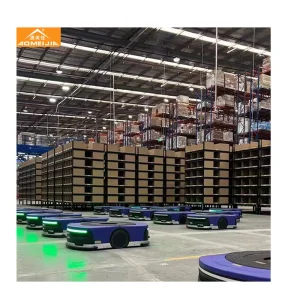
Integration of specialized entry/exit guides, precise stop brackets, and floor clearance adjustments to facilitate seamless automated loading and unloading by Autonomous Mobile Robots (AMRs) and AGVs without human intervention.
Embedding smart optical or pressure sensors within the flow lanes to feed real-time inventory levels, lane blockage warnings, and picker productivity metrics straight into the Warehouse Management System (WMS).
Combining gravity-fed dynamic racking lanes with crane-operated AS/RS retrieval units to unlock maximum volumetric utilization and rapid-fire distribution speeds in ultra-large-scale logistics parks.
Dynamic flow racking systems configured to solve complex space, rotation, and thermal challenges in high-demand industrial sectors.
High-density dynamic racking maximizes sub-zero storage volume, drastically reducing the thermal footprint and cooling cost per pallet. Hot-dip galvanized components withstand extreme humidity cycles.
Guarantees strict FIFO rotation, ensuring that perishables or batches with upcoming expiry dates are systematically picked first. Stainless steel and anti-bacterial coatings ensure hygienic storage.
Provides separate loading and picking lanes, eliminating congestion between replenishing crews and pickers. Integrates seamlessly with light-directed (Pick-to-Light) order sorting systems.
Addressing the critical structural, mechanical, and logistical questions raised by procurement directors and lead engineers.
The industry standard slope for pallet gravity flow lanes is typically between 3% and 4% (approximately 1.75 to 2.3 degrees). The exact inclination depends heavily on the quality, weight, and bottom configuration of the pallets. Wood pallets, plastic pallets, and metal skid plates slide differently, which is why testing is highly recommended during the design phase.
We follow strict testing protocols based on FEM standards and ISO guidelines. Our QC team performs weld ultrasonic testing, tensile testing of the steel, and structural deflection tests. Every system design is simulated for load limit conditions, ensuring it has a safety factor of 1.5 times the rated load capacity.
Yes, but it requires specific engineering adjustments. Standard lubricants freeze at sub-zero temperatures, which can lock the roller bearings. Cold-storage flow racks must use low-viscosity grease or unlubricated precision bearings, and structural steel components should be hot-dip galvanized or treated with high-grade zinc coatings to combat condensation.
Absolutely. Our design department consists of 18 experienced engineers who specialize in customized storage configurations. We provide 3D CAD modeling, structural analysis, and customized load-bearing profiles based on localized seismic requirements, warehouse height, and materials handling equipment specifications.
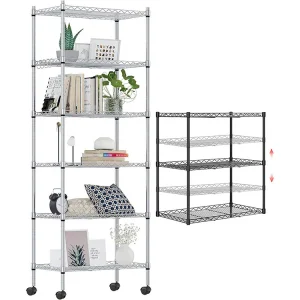
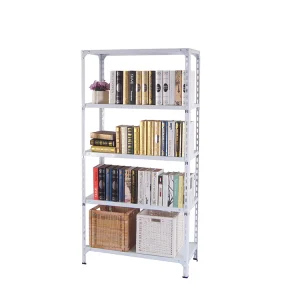
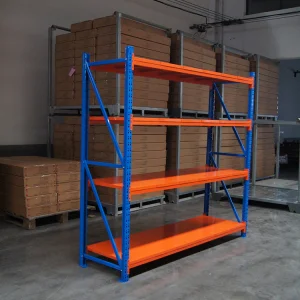
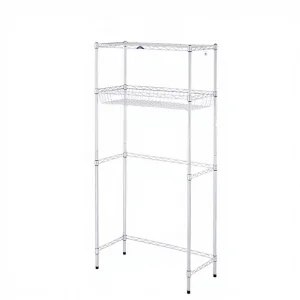
From mobile warehouse containment to space-optimized adjustable wire shelving and AGV-compatible rack interfaces.
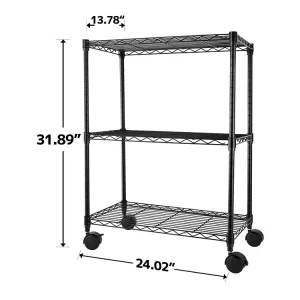
 AomeRack